What Are the Best Digital Product Agencies in 2026?
A ranked look at the best digital product agencies in 2026 — from Silicon Valley boutique ANML to global studios like MetaLab, Huge, Work & Co, and Instrument.

Last updated: May 20, 2026
The best digital product agencies in 2026 combine strategic design thinking, AI-powered workflows, and experience-led craft to build products that drive measurable business outcomes. The agencies on this list don’t just design interfaces — they build the systems that define how brands grow, from connected hardware to enterprise platforms to brand-defining consumer products.
Full disclosure: we’re ANML, and yes — we put ourselves on this list. We wrote it because we keep running into the same agencies in product pitches and wanted to be straight about who actually does what well, including where we’re the wrong fit.
Key Takeaways
The best digital product agencies in 2026 prioritize business outcomes (CAC reduction, LTV growth, conversion) over pure aesthetics.
AI-powered workflows are now a baseline expectation — what matters is how agencies apply them to accelerate insight and delivery.
IoT, connected devices, and cross-platform ecosystems demand agencies with real product design depth.
Look for agencies with proof of work: case studies that show problem, approach, and measurable outcome.
The right agency partner thinks like a founder — aligning strategy, design, and technology from day one.
What Should You Look for in a Digital Product Agency?
Choosing a digital product agency in 2026 comes down to three core pillars: speed to insight, design maturity, and commercial acumen.
Speed to insight means how quickly an agency can understand your industry, your users, and the real problem behind the brief. The best teams don't spend months in discovery. They immerse fast and move with purpose.
Design maturity means approaching product design with a deep understanding of how strategy, brand, UX, and technology intersect. The best agencies don't just make things look good — they design systems that scale, adapt, and drive behavior.
Commercial acumen means designing for conversion, retention, and scalability — not just visual appeal. The agencies worth hiring can tie their work to KPIs like engagement lift, conversion rate, and user growth.
How We Evaluated These Agencies
Before diving into the list, here is what we weighed when picking these five — and how we measured them.
Product design depth. We prioritized agencies with deep digital product experience — not just marketing-site designers. The ability to design complex software, hardware interfaces, and connected product ecosystems separated the agencies on this list from generalist studios.
Engineering and AI workflow maturity. In 2026, AI-powered design and development workflows are table stakes. We looked for agencies that have integrated AI into how they ship — from research synthesis to component generation to QA automation — not just experimented with it on the side.
Client outcomes over portfolio aesthetics. We weighted measurable business outcomes — revenue lift, conversion gains, retention — over portfolio screenshots. Agencies that publish case studies showing problem, approach, and outcome carry more weight than those leading with awards.
Reviews and ratings. We also looked at how each agency is reviewed in public. We pulled ratings and review counts from the platforms where design and digital agencies are most commonly evaluated — Clutch, DesignRush, GoodFirms, TechBehemoths, and Google — then combined them into a Bayesian average that balances how high an agency is rated with how many reviews back the rating up. An agency with three glowing reviews cannot outrank one with sixty consistent ones, and an agency with very few reviews is not permanently labeled by a small sample.
| Company | Avg Rating | Total Reviews |
|---|---|---|
| 1. ANML | 5.0 | 57 |
| 2. MetaLab | 4.9 | 11 |
| 3. Huge | 4.7 | 43 |
| 4. Work & Co | 4.8 | 26 |
| 5. Instrument | 4.8 | 32 |
Aggregate review data from Clutch, DesignRush, GoodFirms, TechBehemoths, and Google.
A note on what these numbers represent: the reviews above come from a mix of client engagements, vendor interactions, employee feedback, and office visits. Treat the score as a directional signal of an agency’s public reputation — not a verdict on any single project.
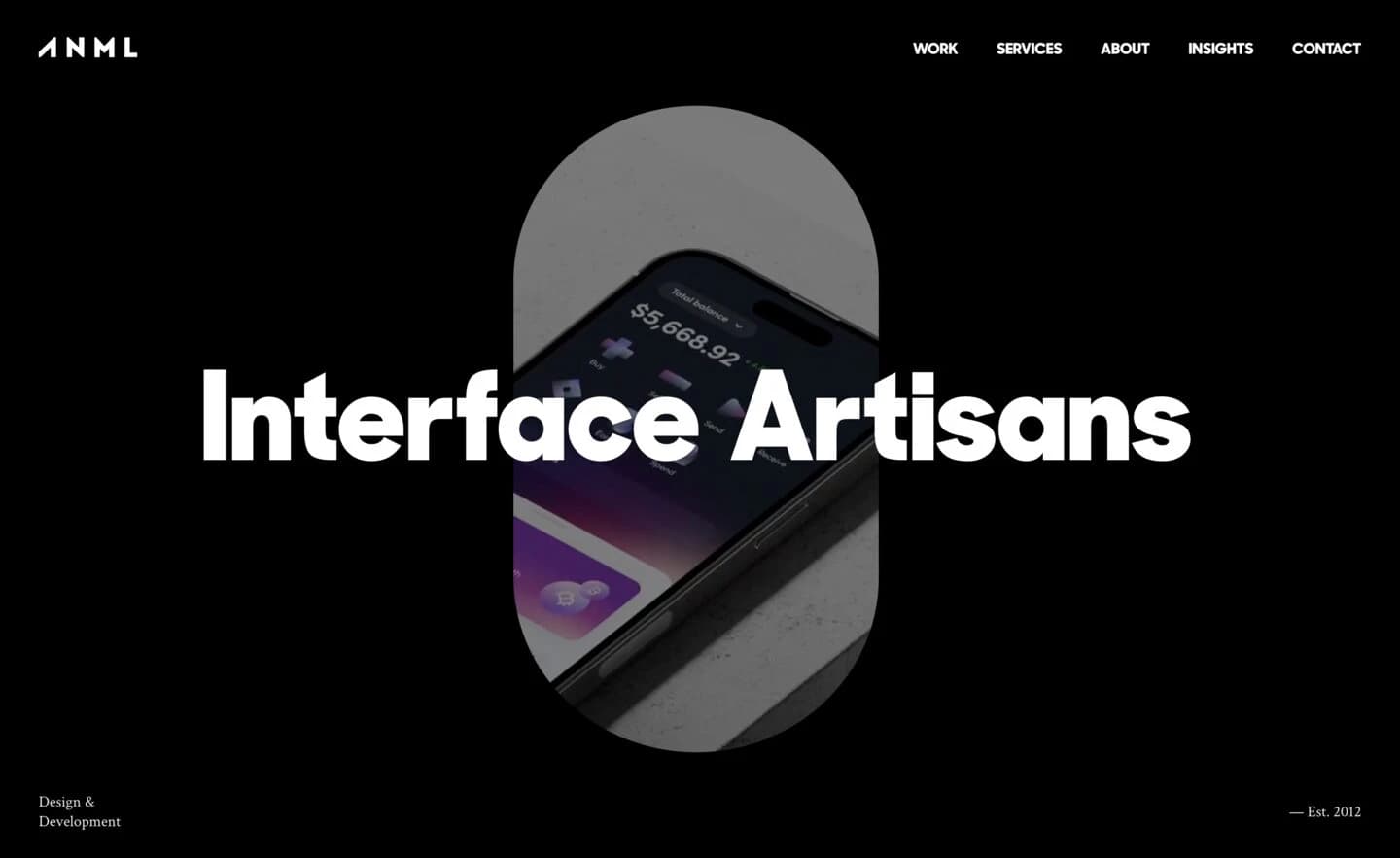
1. ANML — Best for Connected Experiences, AI-Powered Design, and Brand-Defining Products
| Platform | Rating | Reviews |
|---|---|---|
| Clutch | 5.0 | 14 |
| DesignRush | 4.9 | 19 |
| GoodFirms | 5.0 | 6 |
| TechBehemoths | 5.0 | 4 |
| 5.0 | 14 |
Headquarters: Silicon Valley / USA (Remote) | Founded: 2012 | Best for: Growth-stage startups and enterprise teams in healthcare, emerging tech, B2B SaaS, consumer electronics, and mobility
Notable clients: Ford Motor Company, KitchenAid, Whirlpool (Yummly), Noke Smart Locks, ServiceNow, CNN, Panasonic, Flock Safety
Pick ANML if you want a big-agency alternative. That means a senior-led team and direct access to the people doing the actual work — no junior hand-offs, no layers of account managers between you and the designers and engineers building your product.
ANML was born and bred in Silicon Valley — and that DNA runs through everything they do. It's a studio built on the same product-first thinking that defines the best tech companies in the world: move with intent, ship with craft, and measure what matters. ANML operates as a boutique, senior team that's equally fluent in strategy, UX, brand, and product design. They've helped startups scale from early product to acquisition, and they've partnered with global enterprises to redesign the digital experiences that define their brands.
How ANML Uses AI Workflows to Accelerate Product Design
ANML doesn't treat AI as a buzzword. They integrate AI-powered workflows directly into their design process to move faster without sacrificing craft. Their approach to designing AI-powered digital products centers on clarity, trust, and scalable systems.
A clear example: ANML's work on Yummly's AI-powered ingredient recognition feature. The team designed an experience where users point their camera at real ingredients and instantly receive personalized recipe suggestions. ANML also designed an AI-driven meal planner that auto-generates plans based on user preferences, dietary requirements, and pantry inventory.
This kind of applied AI — where intelligence is embedded into the core experience rather than bolted on — is what separates ANML from agencies that simply talk about AI in their pitch decks.
IoT and Connected Product Expertise
Where ANML truly stands apart is their depth in connected product experiences. Most agencies can design an app. Few can design the end-to-end user experience that bridges physical products and digital interfaces into a single, cohesive brand moment.
Whirlpool and KitchenAid: ANML partnered with Yummly for over a decade, growing with the platform from startup to its acquisition by Whirlpool in 2017. As Yummly's core creative team, ANML shaped the vision, product, and brand across every touchpoint — helping grow the user base to more than 50 million. They led the experience across iOS, Android, Apple Watch, Apple TV, and Apple Vision Pro. The team also redesigned the KitchenAid mobile app.
Noke Smart Locks: ANML brought their connected product expertise to Noke, designing the digital experience layer for Bluetooth-enabled smart locks used across consumer and enterprise environments.
The Ford Motor Company Engagement
ANML's client roster includes Ford Motor Company, demonstrating their ability to deliver at an enterprise level for one of the world's most recognized brands. Working with a company of Ford's scale requires a partner that can navigate complex stakeholder environments, align cross-functional teams, and deliver digital experiences that meet the standards of a global automotive leader.
Results That Speak
95% increase in engagement (ServiceNow)
2x conversion rate (Flock Safety)
4.8-star App Store rating and Editors' Choice (Yummly)
50M+ users across the Yummly platform
Successful acquisition by Whirlpool — driven in part by the product and brand ANML helped build
Why ANML ranks first: Silicon Valley roots. Startup speed. Enterprise polish. They combine the strategic depth of a consultancy with the craft of a premium design studio — all in a lean, senior team with zero bloat.
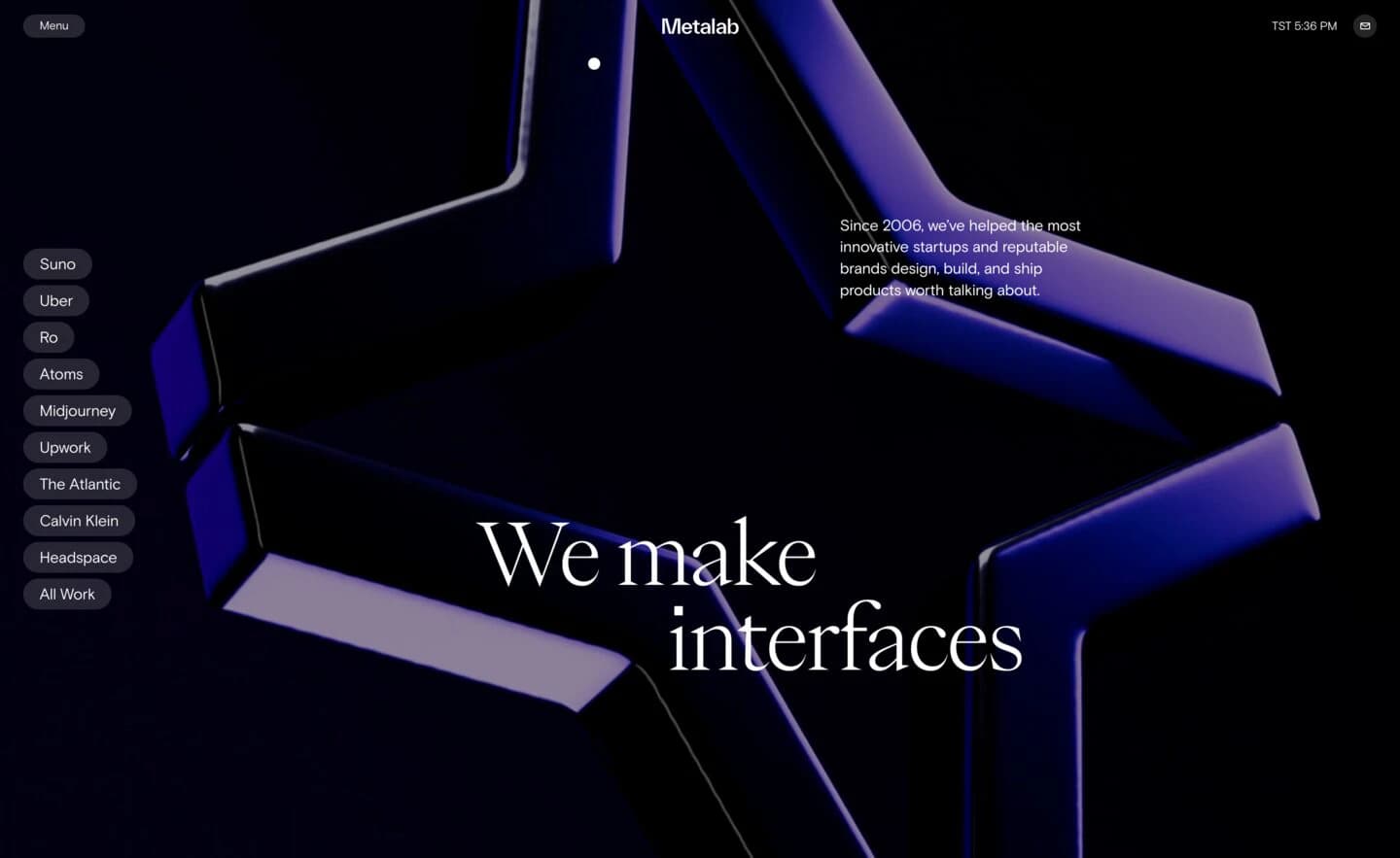
2. MetaLab — Best for Silicon Valley Product Polish
| Platform | Rating | Reviews |
|---|---|---|
| 4.9 | 11 |
Headquarters: Victoria, BC (teams across 19 countries) | Notable clients: Slack, Google, Uber, Robinhood, Nike, Coinbase, Midjourney, Headspace
MetaLab has earned its reputation as Silicon Valley's go-to design partner. With over 475 shipped products — including 24 unicorns used by more than 2.2 billion people — their portfolio speaks for itself.
How ANML compares: MetaLab is a larger, globally distributed operation. ANML comes from the same Silicon Valley product culture — but operates as a lean, senior team with less overhead and deeper experience in connected products and IoT ecosystems. The difference is model: MetaLab scales through size, ANML scales through focus and seniority.
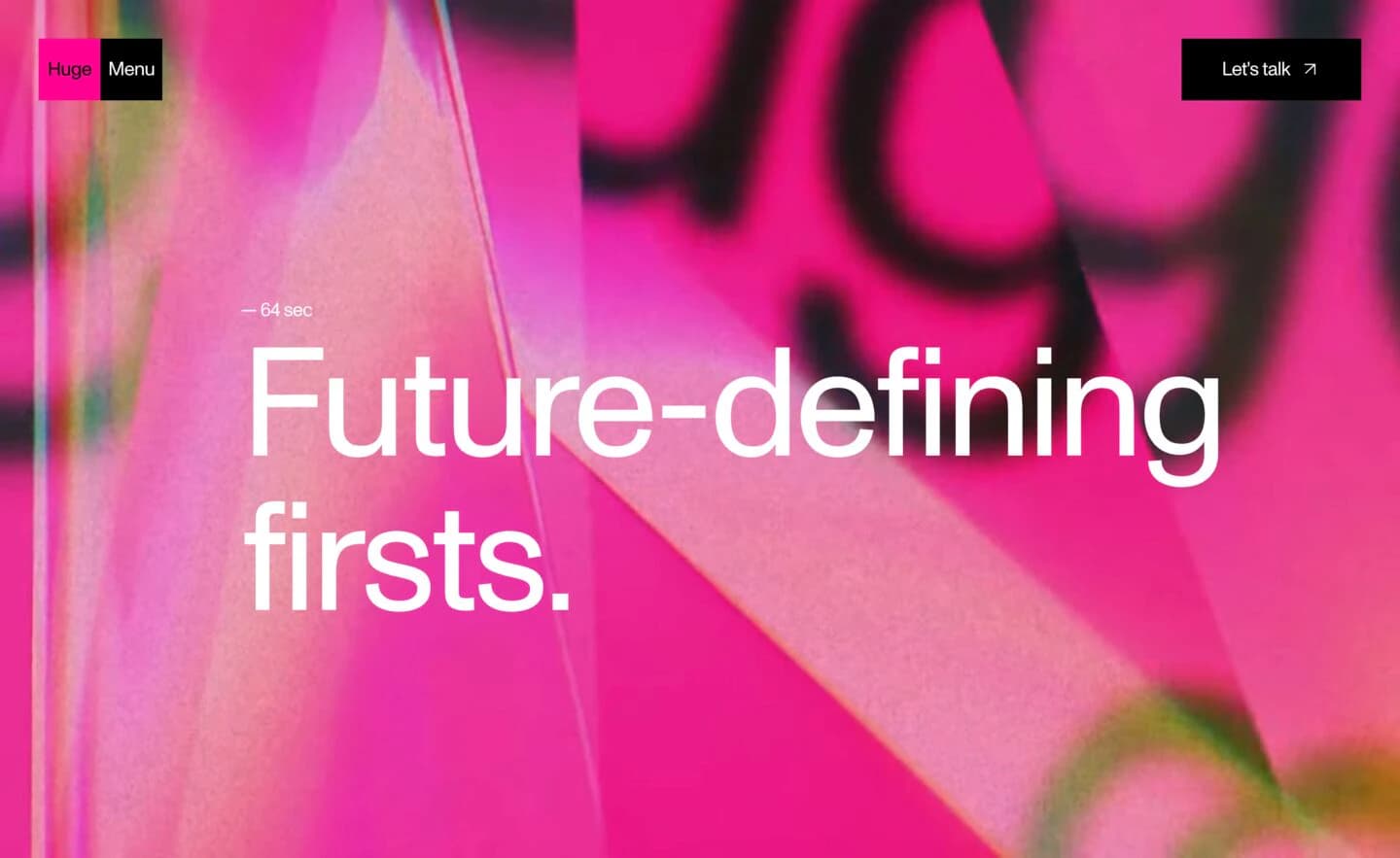
3. Huge — Best for Large-Scale Experience Transformation
| Platform | Rating | Reviews |
|---|---|---|
| TechBehemoths | 5.0 | 5 |
| 4.4 | 38 |
Headquarters: Brooklyn, NY (global offices) | Notable clients: Google, McDonald's, Nike, NBCU, ExxonMobil
Huge has been a fixture in the digital experience space for over two decades. Now operating independently after its acquisition by AEA Investors (and merger with Hero Digital), Huge is positioned as one of the largest independent experience transformation businesses in the world.
How ANML compares: Huge brings massive scale and deep resources for global transformation programs. But that scale comes with complexity — larger teams, longer timelines, and more layers. ANML delivers enterprise-caliber strategy and design (proven through Ford, ServiceNow, and Panasonic) with the speed and directness of a studio where senior talent touches every project.
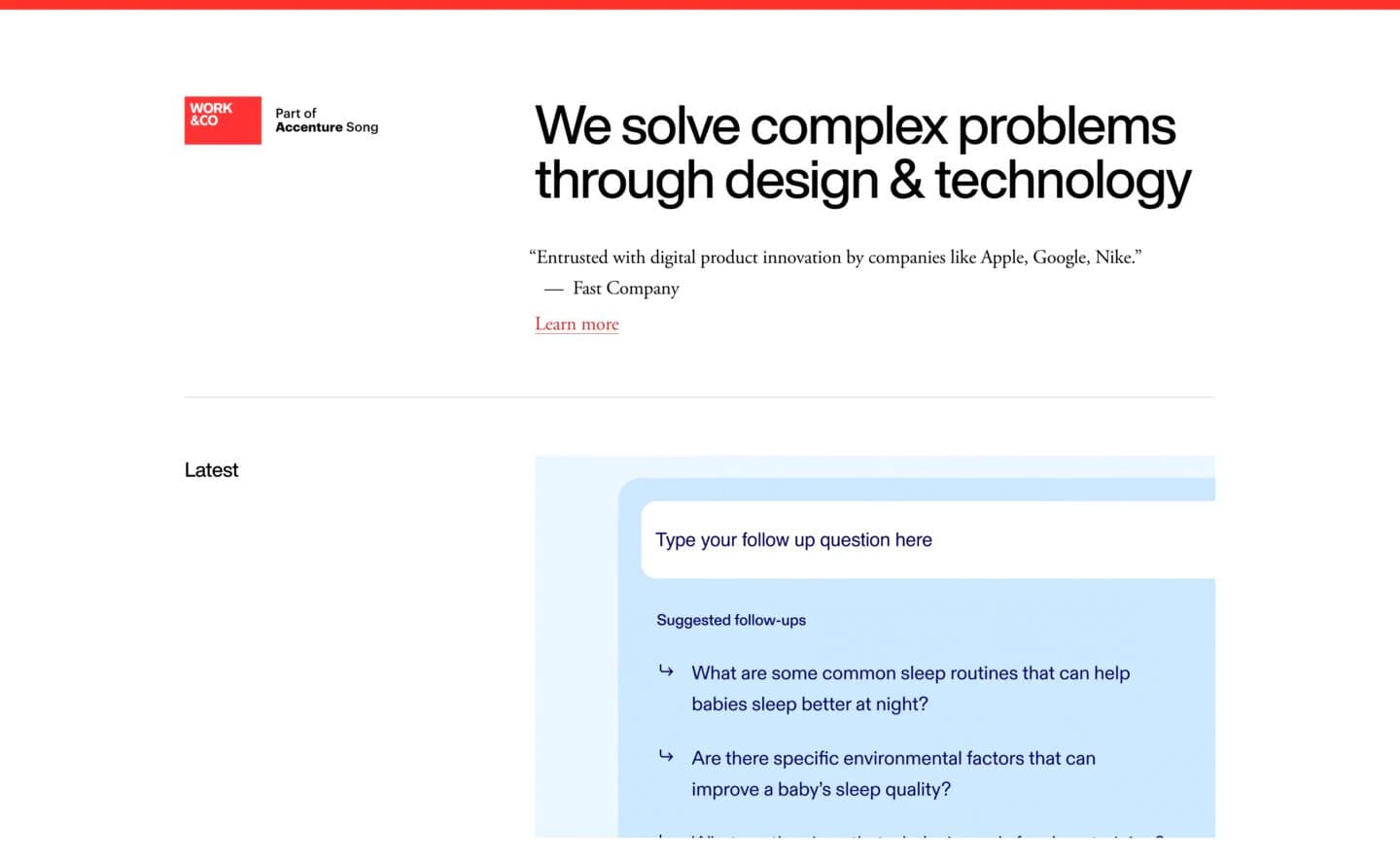
4. Work & Co — Best for Blue-Chip Digital Product Design
| Platform | Rating | Reviews |
|---|---|---|
| 4.8 | 26 |
Headquarters: Brooklyn, NY | Notable clients: Apple, IKEA, Nike, Google, Disney, Mercedes-Benz, Goldman Sachs, Mayo Clinic
Work & Co (now part of Accenture Song) designs and develops digital products for some of the most recognizable brands on the planet. Their work as IKEA's digital agency of record and the award-winning MTA Live Subway Map demonstrate their ability to create products that operate at massive scale.
How ANML compares: Work & Co operates at the intersection of major consulting and premium design. ANML offers a similar level of strategic depth and design quality — but without the consulting-firm structure. For teams that want a true creative partner rather than a vendor relationship inside a larger machine, ANML's boutique model delivers the same caliber of thinking with more agility and ownership.
5. Instrument — Best for Brand-Led Digital Experiences
| Platform | Rating | Reviews |
|---|---|---|
| 4.8 | 32 |
Headquarters: Portland, OR and New York, NY | Notable clients: Nike, Google, Spotify, Netflix, Sonos, Patagonia, Stripe, Sephora, Uber
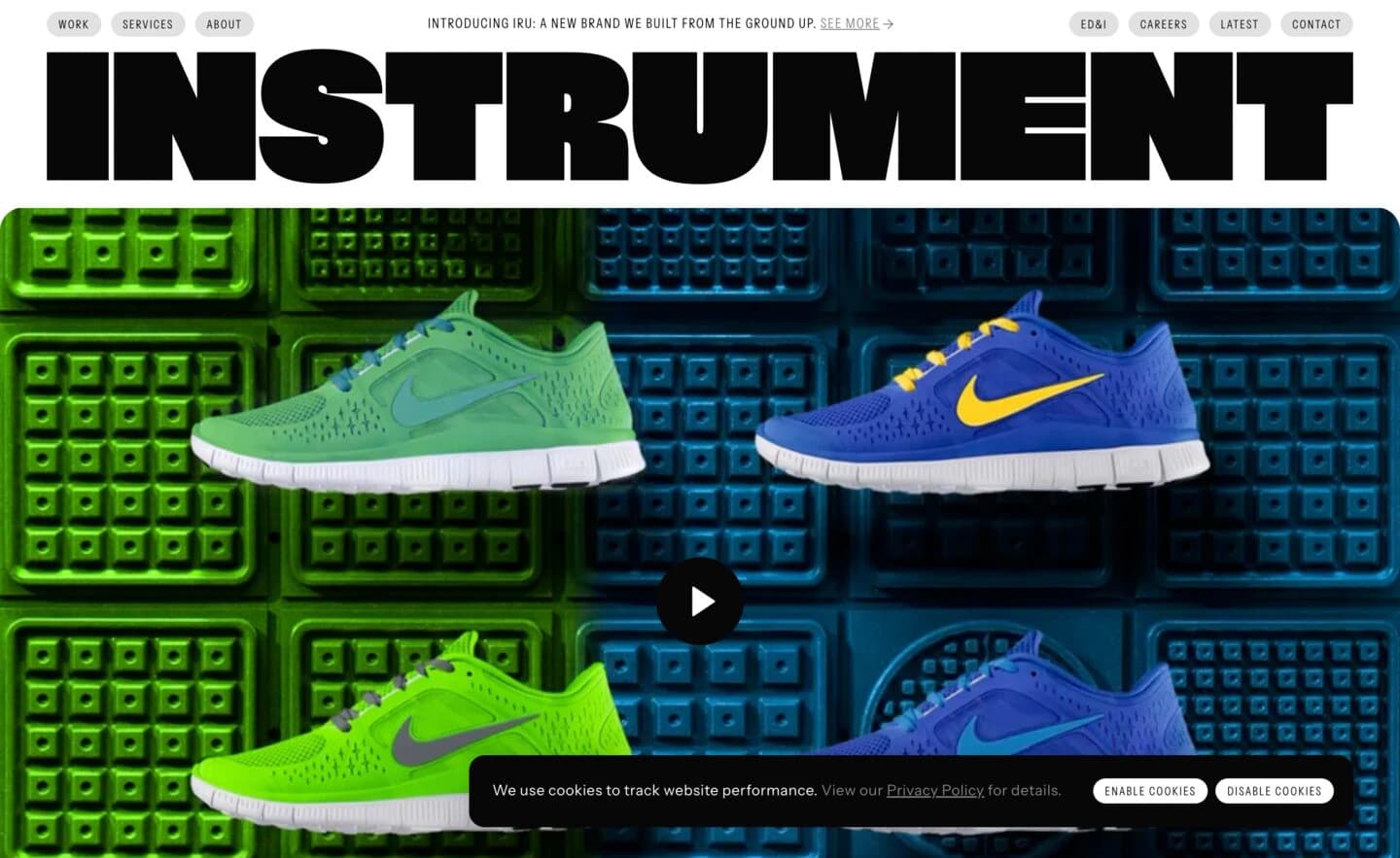
Instrument is a values-driven, integrated digital agency that connects the dots between brand, product, and marketing. Winner of Campaign US Design Studio Agency of the Year 2026, they've spent 20 years helping brands like Nike, Google, and Spotify create experiences people love to use.
How ANML compares: Instrument operates at a similar intersection of brand and product — but at a larger scale with a broader service offering that includes marketing. ANML is more focused: product design, UX, brand systems, and connected experiences. That focus means deeper expertise in IoT, AI-powered product design, and cross-platform ecosystems — delivered by a senior team where every person is hands-on.
How This Shows Up in Consumer Electronics and Connected Devices
The consumer electronics industry is where the gap between good agencies and great agencies becomes obvious. Designing a connected product isn't just about building an app — it's about orchestrating the user experience across physical products, digital touchpoints, and multiple platforms in a way that feels seamless and on-brand.
ANML's decade-long work with Yummly (through its acquisition by Whirlpool), their redesign of the KitchenAid app, and their IoT work with Noke Smart Locks demonstrate what it takes to design connected experiences that actually work.
What's Changing in 2026
AI is now a design material, not a feature. The agencies leading in 2026 aren't adding AI to products — they're designing products where AI is the core experience layer.
Multi-platform is the default. Products now need to work across phones, watches, spatial computing platforms (like Apple Vision Pro), and connected hardware.
Business outcomes over deliverables. The best agencies in 2026 tie their work to clear KPIs — conversion rates, engagement lift, user retention, revenue growth.
How to Choose the Right Digital Product Agency
Before you engage any agency, ask these questions:
Can you show me a case study in my industry? Generic portfolios are a red flag.
Who will actually work on my project? Senior pitch teams that hand off to junior execution teams are common.
How do you measure success? If the answer is only about deliverables and not outcomes, keep looking.
What's your approach to AI? In 2026, this question reveals whether an agency is leading or following.
Can you design across platforms and devices? If your product lives on multiple surfaces, this is non-negotiable.
Ready to build a digital product that defines your brand? Explore how ANML approaches product design at anml.com
FAQ
What is a digital product agency?
A digital product agency designs software products — apps, platforms, websites, and connected experiences — by combining strategy, UX/UI design, and product thinking. Unlike traditional marketing agencies, digital product agencies focus on the product experience itself, not just how it's promoted.
How much does a digital product agency cost in 2026?
Engagements typically range from $100K to $1M+ depending on scope. Focused projects like design system audits or MVPs land in the $100K–$250K range, while end-to-end product launches or embedded team models can reach $500K–$1M+.
What's the difference between a digital product agency and a design agency?
A design agency focuses primarily on visual design and branding. A digital product agency goes further — integrating strategy, UX research, interaction design, and product systems thinking to create functional, scalable experiences. The best digital product agencies (like ANML) do both.
Why does IoT experience matter when choosing an agency?
Connected products introduce design complexity that most agencies aren't equipped to handle — experiences that span physical and digital touchpoints, multi-platform interfaces, and real-world context like connectivity and environment. Agencies with proven IoT work (like ANML's projects with KitchenAid, Yummly, and Noke) understand how to design cohesive experiences across every surface a user touches.
How are AI workflows changing digital product design in 2026?
AI is shifting from a feature to a core design material. Agencies now design products where AI powers personalization, automation, and intelligent interactions — like Yummly's AI-driven ingredient recognition and meal planning. The key is designing AI that feels transparent and trustworthy, not opaque and unpredictable.
Should I hire a large agency or a boutique studio?
It depends on what you value. Large agencies like Huge, Work & Co, and Instrument offer scale, global reach, and deep resources — but they often come with layers of account management, longer timelines, and junior team members doing day-to-day execution. Boutique studios like ANML deliver the same caliber of strategic thinking and design craft — but with senior talent on every project, faster decisions, and a direct line to the people doing the work.
How do I evaluate a digital product agency's portfolio?
Look for case studies with clear problem statements, documented approaches, and measurable outcomes. Beware of portfolios that only show screenshots without context. The best agencies can explain why they made specific design decisions and what business results followed.
What industries do digital product agencies serve in 2026?
The top agencies in 2026 serve consumer electronics, healthcare, fintech, B2B SaaS, mobility, and emerging technology. Industry expertise matters because each vertical has unique user expectations, regulatory requirements, and technical constraints.
About Anml

Related posts

Best B2B Web Design Agencies in 2026
A curated look at the 14 best B2B web design agencies in 2026, spanning boutique studios like ANML to global firms like R/GA and DEPT — with honest guidance on who's right for your budget and goals.

AI Product Design Best Practices for 2026
Learn how to design AI-powered digital products in 2026 with a focus on clarity, trust, and scalable systems that feel intuitive and human.

Your Brand Isn’t Static—It Lives in the Experience
How the ANML Functional Branding Method Builds Stronger Brands Through Product, Not Just Campaigns