Top Healthcare UX Design Agencies in 2026
A curated list of the 10 leading healthcare and health-tech design agencies in 2026, from senior-led specialists to global consultancies, with honest comparisons and real review data.

The Top Healthcare UX Design Agencies in 2026
Last updated: July 1, 2026
TL;DR
Best senior-led UI/UX for connected experiences, apps, and web platforms: ANML, health-tech and digital-health UI/UX across connected experiences, apps, and web platforms (orthodontics, AI diagnostics, wellness), with direct access to the senior team doing the work.
Best for human-centered healthcare design with research depth: IDEO, medical-device and health-system design from the firm that wrote the design-thinking-in-healthcare playbook.
Best for medical-device product design: EPAM Continuum and Veranex (Ximedica), regulated device design and FDA human factors, backed by real engineering.
Best for healthcare service design: Designit, patient-journey and service design at health-system scale.
Best for regulated, complex health industries: frog, device and life-sciences design backed by Capgemini engineering.
Best for enterprise health transformation: Deloitte Digital, Publicis Sapient, and Accenture Song, payer, provider, and pharma platforms and Fortune 500 transformation at consultancy scale.
Best for experience design inside a platform build: Slalom, UX delivered alongside cloud, data, and CRM.
Full disclosure: we are ANML, and yes, we put ourselves at the top of this list. We wrote it because we keep meeting the same firms in health-tech design conversations and wanted to be straight about who does what well, including where a large consultancy is a better fit than we are.
Choosing a design partner for a healthcare product is harder than for most software. "Healthcare UX" is a label many agencies now use, but the firms that have actually shipped products a clinician, patient, or caregiver relies on (under HIPAA, FDA classifications, and real clinical workflows) are a smaller, identifiable group.
We deliberately kept this list to large, established firms priced above a boutique: independent design leaders, medical-device specialists, and global consultancies. If you want a senior-led specialist, that is us and firms like us; if you need a multi-thousand-person bench for a multi-year, multi-country transformation, several firms below are built for exactly that. If a global consultancy would over-scope and over-price your project (and many funded health-tech teams are simply too small to be a priority client for them), a senior-led specialist like ANML delivers comparable quality at a more achievable price and pace. Whether you are designing a patient app, a clinician-facing AI tool, or a connected medical device, these are the firms worth talking to.
If you are evaluating agencies for other kinds of work, see our companion pieces, Top AI Design Agencies in 2026 and Best B2B Web Design Agencies in 2026, which use the same review methodology.
What to Look for in a Health Tech Product Design Agency
Before the list, here is what actually separates a healthcare design partner from a generalist that added a "health" page to its website.
Shipped healthcare products in production
Prioritize firms that have shipped health products real users depend on (patient apps, clinician tools, medical-device software), not prototype demos. Ask for case studies where the product is live, used by patients or providers, and measured.
Design for safety, uncertainty, and clinical workflow
Healthcare products carry the weight of an outcome. Good health design surfaces confidence and uncertainty, makes errors recoverable, keeps a human in control of consequential decisions, and holds up inside zero-friction clinical workflows. This is especially true for AI features, where the interface has to communicate model confidence and give a clinician a clear path to override.
Regulatory and compliance fluency
Health products come with constraints most software does not: HIPAA, FDA classifications for Software as a Medical Device (SaMD), and human-factors requirements. Look for teams used to integrating regulatory language without breaking flow and iterating design against clinical and compliance review.
Outcomes over portfolio aesthetics
Weight measurable results (adherence, time-to-diagnosis, adoption, error reduction) over screenshots. Firms that publish problem, approach, and outcome carry more weight than those leading with awards.
Reviews and ratings
We also looked at how each firm is reviewed in public. We pulled ratings and review counts from the platforms where design and digital agencies are most commonly evaluated (Clutch, DesignRush, GoodFirms, TechBehemoths, and Google) and combined them into a Bayesian average that balances how high a firm is rated with how many reviews back it up. One important caveat for this particular list: most large consultancies do not cultivate profiles on these directories, so many rows below show "N/A." For those firms, reputation lives in named case studies and analyst coverage (Gartner, Forrester), not star ratings, which is itself worth knowing when you compare them to a specialist.
| Company | Avg Rating | Total Reviews |
|---|---|---|
| 1. ANML | 5.0 | 57 |
| 2. IDEO | N/A | N/A |
| 3. EPAM Continuum | 4.7 | 24 |
| 4. Veranex (Ximedica) | 3.0 | 2 |
| 5. Designit | 4.7 | 16 |
| 6. frog | 4.8 | 4 |
| 7. Publicis Sapient | N/A | N/A |
| 8. Deloitte Digital | 3.4 | 83 |
| 9. Slalom | N/A | N/A |
| 10. Accenture Song | 4.8 | 20 |
Aggregate review data from Clutch, DesignRush, GoodFirms, TechBehemoths, and Google. "N/A" means the firm maintains no meaningful client-review profile on these directories.
A note on what these numbers represent: the reviews above come from a mix of client engagements, vendor interactions, employee feedback, and office visits, so treat each score as a directional signal of public reputation, not a verdict on any single healthcare project. Several of the largest firms show "N/A" because they do not maintain client-review profiles on these directories at all. For them, reputation lives in named case studies and analyst coverage (Gartner, Forrester) rather than star ratings. Worth noting: ANML holds the deepest and highest verified review record on this list.
1. ANML: Best for senior-led health-tech and digital-health product design
Location: San Jose, CA (remote-first)
Founded: 2012
Team size: Boutique, senior team
Best for: UI/UX for connected experiences, apps, and web platforms in health tech and digital health, where a real outcome is on the line
Notable clients: OrthoFX, PanasonicWell, Cognita AI, Whirlpool, Panasonic, Ford, ServiceNow, Yummly
Website: www.anml.com
| Platform | Rating | Reviews |
|---|---|---|
| Clutch | 5.0 | 14 |
| DesignRush | 4.9 | 19 |
| GoodFirms | 5.0 | 6 |
| TechBehemoths | 5.0 | 4 |
| 5.0 | 14 |
Overview
ANML is a senior-led design and development studio building UI/UX for connected experiences, apps, and web platforms in health tech and digital health, from OrthoFX (orthodontics platform and brand) to PanasonicWell (an AI wellness companion for families) to Cognita AI (AI-powered radiology). Founded by Douglas Hughmanick and Patrick Boscarino, the studio designs interfaces for products that have to earn the trust of a user whose decisions have real consequences.
Why they stand out for healthcare
Health-tech UX has constraints most product design does not: regulatory language integrated without breaking flow, clinical workflows that expect zero-friction speed, and data clear enough that a nurse, a specialist, or a parent can act on it in seconds without over-simplifying the underlying complexity. ANML’s health portfolio spans consumer wellness, clinician-facing AI, and diagnostic tools, with direct experience designing against HIPAA and SaMD constraints and iterating design against clinical review. At 5.0 across 57 reviews on Clutch, DesignRush, GoodFirms, TechBehemoths, and Google, it also holds the strongest verifiable review record on this list. And it delivers that senior craft without the layers, multi-quarter timelines, or six- and seven-figure minimums of a global consultancy, the right fit for funded teams who would be a small account at the giants below but still want that level of quality at a more achievable price.
What to know before hiring
Built for funded health-tech and digital-health companies that want a senior team doing the actual work, and want it fast. Best fit when the interface carries the weight of a patient outcome and you value direct access to the makers. Not the right fit if you need a multi-thousand-person bench for a multi-year, multi-geography enterprise transformation. Several firms below are built for exactly that.
See ANML’s healthcare UX case studies →
2. IDEO: Best for human-centered healthcare design with research depth
Location: Palo Alto and San Francisco, CA
Founded: 1991
Team size: ~300 (independent)
Best for: Health systems, medical devices, and public-health programs where research depth and responsible design matter
Notable clients: Kaiser Permanente, Verathon, Teal Health, Willow, Omada Health, Newton-Wellesley Hospital, Eli Lilly
Website: www.ideo.com
| Platform | Rating | Reviews |
|---|---|---|
| Clutch | Not listed | N/A |
| DesignRush | Not listed | N/A |
| GoodFirms | Not listed | N/A |
| TechBehemoths | Not listed | N/A |
| Not listed | N/A |
Overview
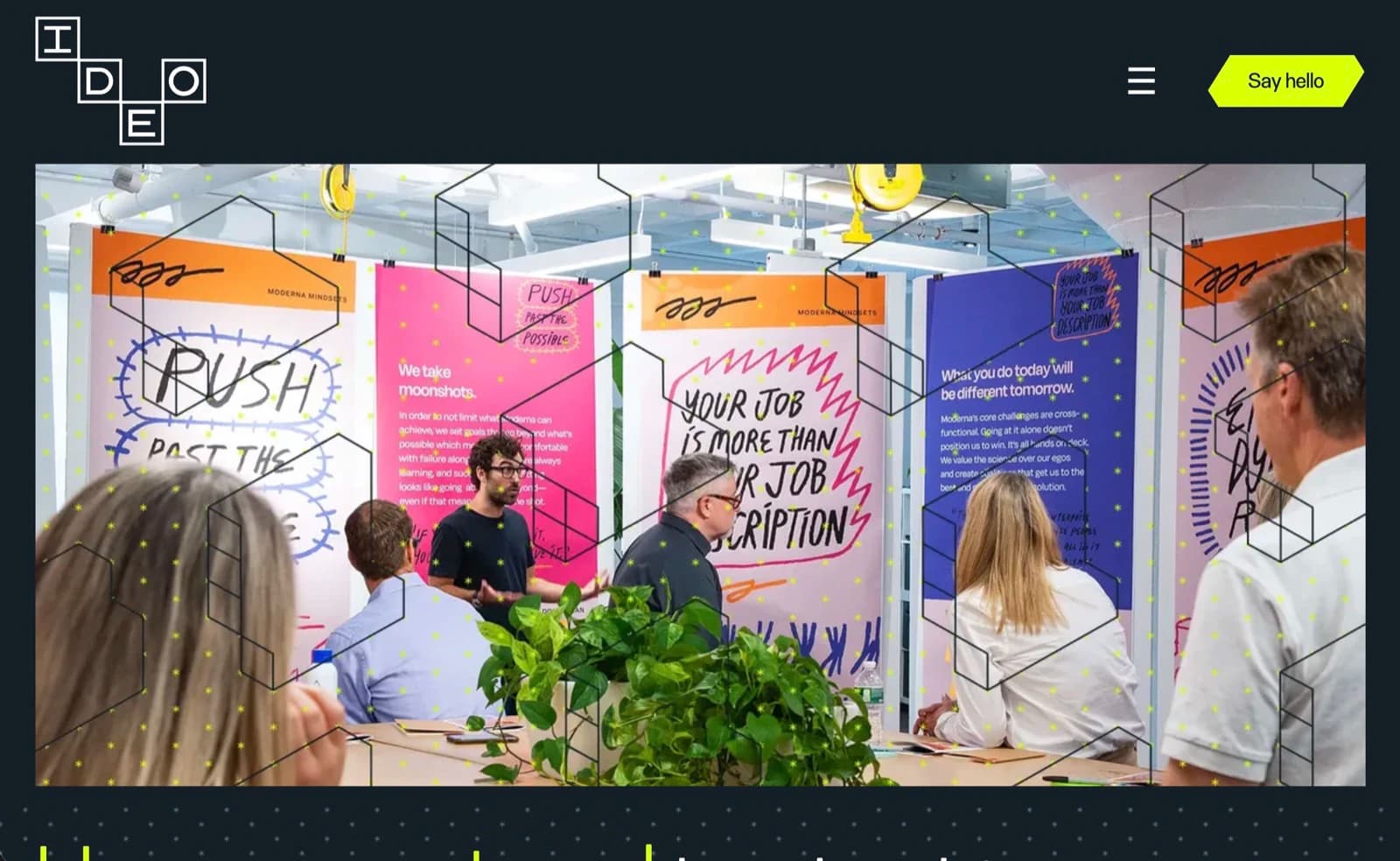
IDEO is the firm that popularized human-centered design, and it runs a dedicated Design for Health practice with decades of healthcare work behind it.
Why they stand out for healthcare
Its named health work spans medical devices (Verathon’s GlideScope, Willow’s wearable breast pump, Teal Health’s at-home cervical-cancer screening), digital health (Omada, Ubie), and health-system design (Kaiser Permanente’s Nurse Knowledge Exchange and MedRite medication-safety programs). IDEO essentially co-authored the "design thinking in healthcare" playbook and has published influential thinking on responsible, explainable design for regulated settings.
What to know before hiring
Research-heavy, longer timelines, and premium pricing, from a firm now roughly half its former size after 2023 restructuring. Best when you need to deeply understand a complex patient or clinician population before designing, and want IDEO’s methodological rigor. Like most large firms here, IDEO keeps no real client-review presence on the directories. Judge it on its case studies, not star ratings.
3. EPAM Continuum: Best for medical-device and connected-health product design
Location: Boston, MA (plus Milan, Seoul, Shanghai)
Founded: 1983 (Continuum); acquired by EPAM in 2018
Team size: Several hundred designers within EPAM Systems (60,000+)
Best for: Regulated medical-device and connected-health products that need design and engineering under one roof
Notable clients: UnitedHealthcare, Mercy Health System, Philips Respironics
Website: www.epam.com
| Platform | Rating | Reviews |
|---|---|---|
| 4.7 | 23 | |
| Clutch | 5.0 | 1 |
Overview
Continuum, founded in Boston in 1983, is one of the original human-centered product-design firms (it designed the Reebok Pump and P&G’s Swiffer) and is now the design and innovation arm of EPAM Systems, a public global engineering company.
Why they stand out for healthcare
The healthcare work is real and named: redesigning UnitedHealthcare’s Advocate4Me member-service experience, a patient-experience blueprint across Mercy Health’s 45 hospitals, and the Philips Respironics CPAP device that measurably lifted therapy adherence. Its founder came out of medical-device maker Instrumentation Laboratory, and its Life Sciences and Healthcare practice designs and develops regulated devices and software against quality and regulatory requirements, with design fused with EPAM’s engineering scale.
What to know before hiring
You are buying enterprise-scale, engineering-backed delivery rather than a lean studio, and its directory reviews live under "EPAM Systems" rather than a distinct design brand. Best when your product needs both credible healthcare design and heavy regulated engineering behind it, and you have the budget for an enterprise engagement.
4. Veranex (Ximedica): Best for regulated medical-device design and human factors
Location: Raleigh, NC (design studios in Providence, RI, Minneapolis, and San Francisco)
Founded: Ximedica 1985; Veranex formed 2021
Team size: ~900 total (design unit ~120–140)
Best for: Regulated medical-device design and FDA human factors, concept to commercialization
Notable clients: Medtronic, Boston Scientific, Stryker, Johnson & Johnson, Becton Dickinson, Zimmer Biomet
Website: www.veranex.com
| Platform | Rating | Reviews |
|---|---|---|
| 3.0 | 2 |
Overview
Veranex’s design capability comes from Ximedica, a RISD-rooted medical-device design and human-factors firm founded in 1985 and now the front end of Veranex’s concept-to-commercialization "innovation CRO" pipeline.
Why they stand out for healthcare
It is one of the longest-standing medical-device product-design and human-factors practices in the US: industrial design, UX/UI, and full FDA human-factors programs (formative and summative usability studies, instructions for use, labeling) for blue-chip medtech like Medtronic, Boston Scientific, Stryker, and J&J. If your product is a regulated device where use-safety and human factors are the core design problem, this is genuine depth.
What to know before hiring
It is a ~900-person, PE-owned developer, not a pure UX studio; design is the smaller front end of a pipeline that continues through preclinical, clinical, and regulatory work, and its public client-review footprint is thin. Best for medtech hardware and software where regulatory-grade human factors matter most.
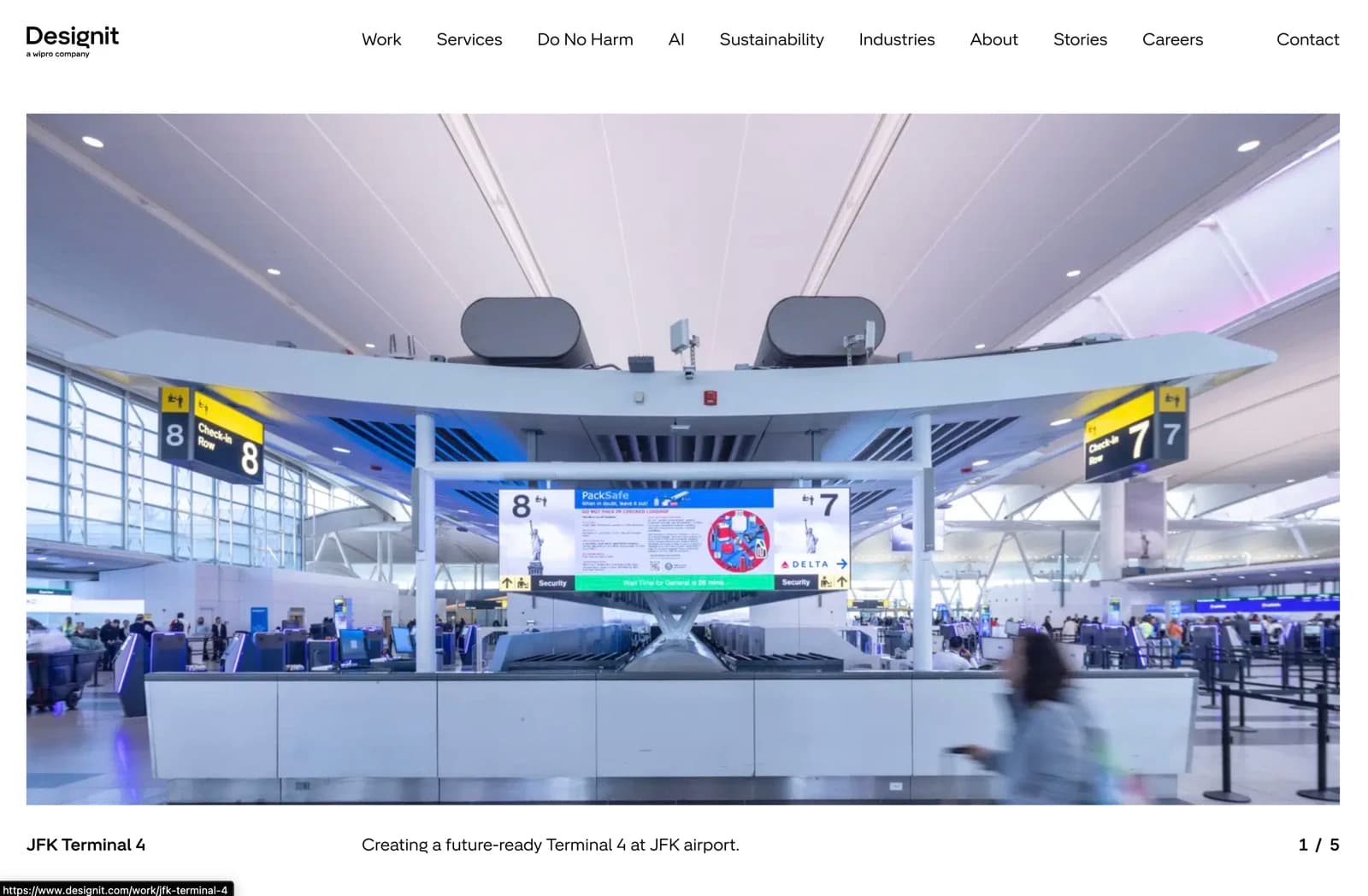
5. Designit: Best for healthcare service design
Location: Copenhagen, Denmark (plus Oslo, London, New York, San Francisco)
Founded: 1991; acquired by Wipro in 2015
Team size: ~700
Best for: Patient-journey and service design, especially for health systems
Notable clients: Oslo University Hospital, GN ReSound, HemoCue
Website: www.designit.com
| Platform | Rating | Reviews |
|---|---|---|
| 4.7 | 16 |
Overview
Designit is a strategic and service-design firm, the design arm of Wipro Digital, with Nordic service-design roots and a dedicated healthcare practice.
Why they stand out for healthcare
Its flagship healthcare case is world-class: redesigning Oslo University Hospital’s breast-cancer diagnostic pathway cut time-to-diagnosis from 12 weeks to 7 days and became the basis for Norway’s national standard. Add medtech work such as GN ReSound’s Apple Watch hearing-aid app and HemoCue diagnostics, and you have a firm that genuinely does patient-journey and service design at health-system scale.
What to know before hiring
Strongest in European service design for public health systems and Nordic medtech; several marquee proof points skew a few years old and lean service design over recent US digital-health product work. Backed by Wipro’s global scale, an enterprise engagement, not a boutique one.
6. frog: Best for design in regulated and complex health industries
Location: San Francisco, CA (global offices)
Founded: 1969
Team size: ~2,200 within Capgemini Invent
Best for: Healthcare and life-sciences design backed by enterprise engineering and compliance
Notable clients: GE Healthcare, Lumen, UCSF, MeMed (also Disney MagicBands)
Website: www.frog.co
| Platform | Rating | Reviews |
|---|---|---|
| 4.8 | 4 |
Overview
frog is a legendary design consultancy (early Apple industrial design, Disney’s MagicBands), now part of Capgemini Invent, with a dedicated Healthcare and Life Sciences practice.
Why they stand out for healthcare
Its health work spans connected medical devices (Lumen’s metabolic device), AI in care (UCSF), device interfaces (GE Healthcare), diagnostics (MeMed), and global public health (GSMA mHealth, UNICEF). Through Capgemini it can carry a project from research and design into ML, data engineering, and regulated implementation.
What to know before hiring
Some flagship health references skew older and toward devices and global health rather than recent US health-system UX. The Capgemini relationship brings enterprise-scale resources, and a larger-feeling engagement than a boutique.
7. Publicis Sapient: Best for health digital transformation and public health
Location: Boston, MA (50+ offices)
Founded: Sapient 1990; rebranded Publicis Sapient in 2019
Team size: ~20,000
Best for: Payer, provider, pharma, and government health platforms and legacy modernization
Notable clients: NIH/NINDS, HRSA, plus major (anonymized) health insurers, pharmacies, and health systems
Website: www.publicissapient.com
| Platform | Rating | Reviews |
|---|---|---|
| Clutch | Not listed | N/A |
| DesignRush | Not listed | N/A |
| GoodFirms | Not listed | N/A |
| TechBehemoths | Not listed | N/A |
| Not listed | N/A |
Overview
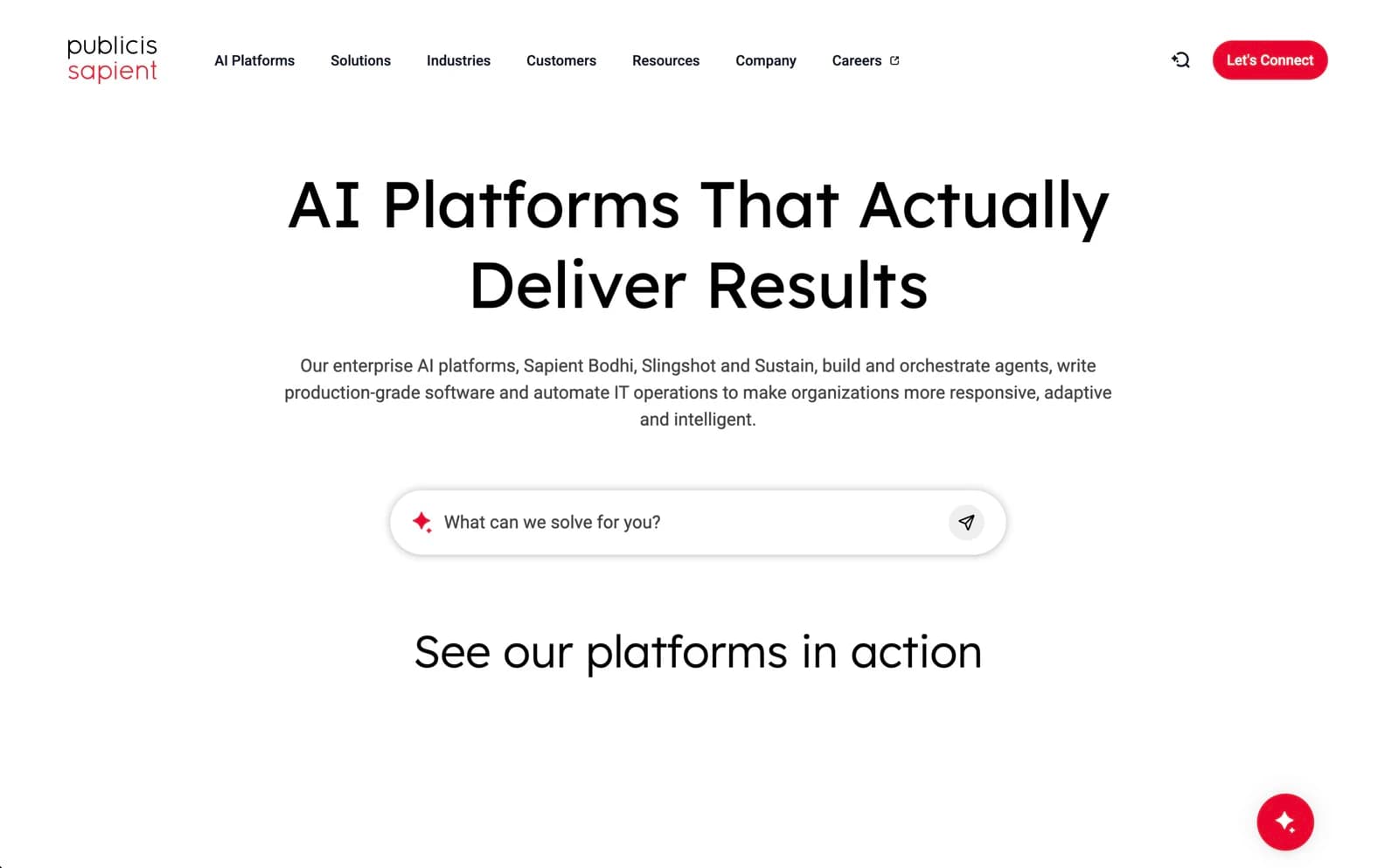
Publicis Sapient is the go-to "digital business transformation" partner for large enterprises, with its own Health practice spanning providers, payers, pharma, and public health, distinct from Publicis Groupe’s marketing-focused Publicis Health.
Why they stand out for healthcare
Public-sector health is a genuine strength: the NIH Parkinson’s Biomarker Program centralized research data and ML and tripled funded projects, and HRSA’s modernization helped 21,000+ providers serve 21M+ patients. Enterprise work (largely anonymized) includes Medicare member re-engagement, digital pharmacy, and a 43-point medication-adherence gain for a US health system. The work spans legacy modernization, product and experience design, and enterprise AI via its SPEED framework.
What to know before hiring
Multi-workstream enterprise programs with bespoke, premium pricing, built for large-scale modernization, not a single product surface. Like its peers, it carries no meaningful directory-review footprint; credibility lives in named case studies and analyst coverage.
8. Deloitte Digital: Best for health-system, payer, and provider transformation at scale
Location: US studios nationwide (parent Deloitte, London)
Founded: Deloitte Digital launched 2012
Team size: 17,000+ across 48+ studios
Best for: Enterprise health-system, payer, and provider transformation with a dedicated digital-health product business
Notable clients: NYU Langone Health, Merck, Medtronic
Website: www.deloittedigital.com
| Platform | Rating | Reviews |
|---|---|---|
| 3.4 | 83 |
Overview
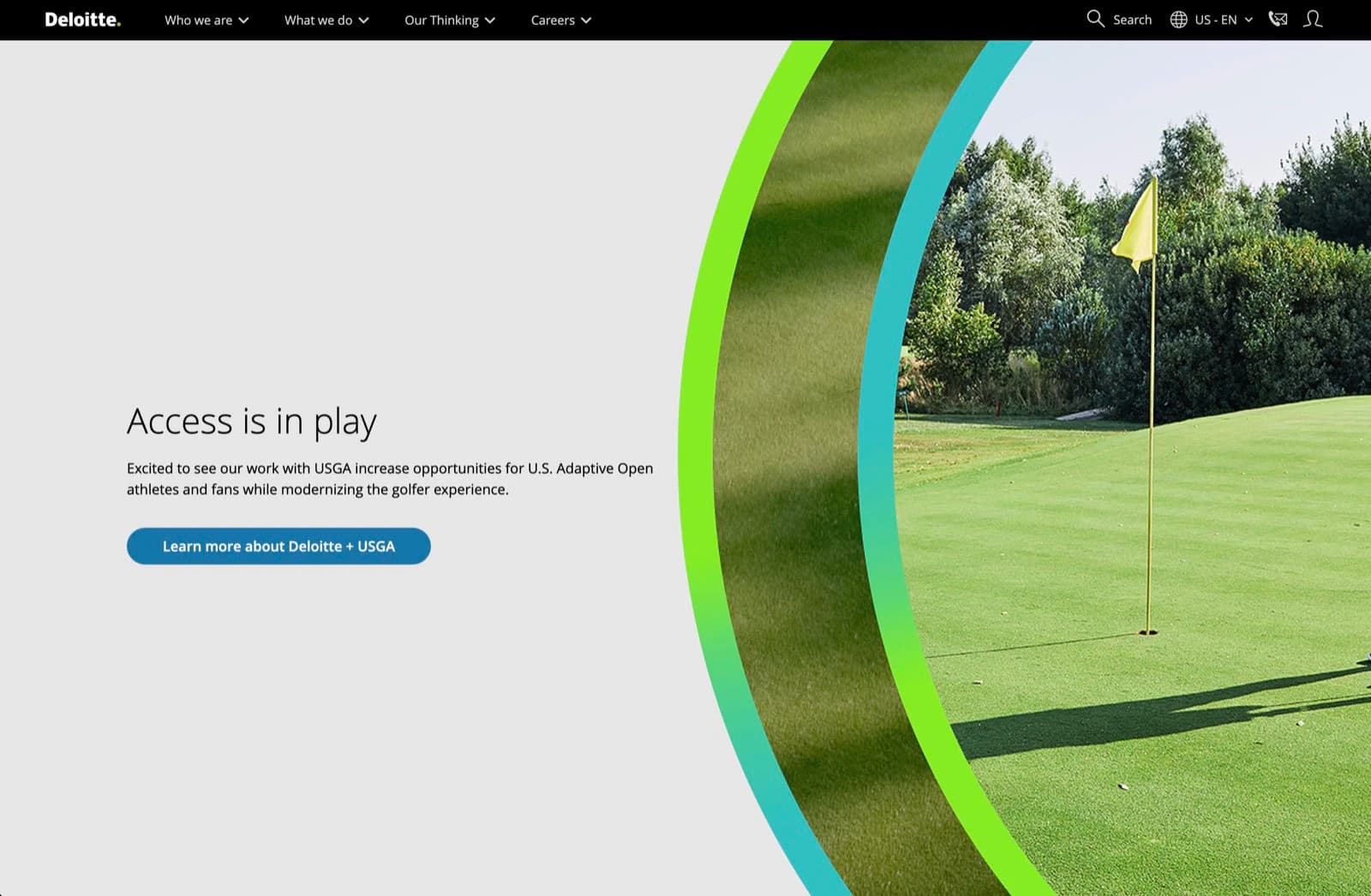
Deloitte Digital describes itself as "a consultancy, technology firm, and creative agency rolled into one," and it has one of the deepest healthcare footprints on this list. Its Life Sciences and Health Care practice serves the top-20 pharma and medical-device companies.
Why they stand out for healthcare
ConvergeHEALTH is a dedicated digital-health product business whose platforms have improved the experience of 2M+ patients across 22+ countries. Named design-led work includes NYU Langone Health’s brand and patient experience, plus Merck and Medtronic engagements, with design delivered inside large Salesforce and Adobe Health Cloud builds.
What to know before hiring
You are buying Big-4 scale, regulated-industry compliance depth, and premium rates for enterprise transformations, not boutique projects.
9. Slalom: Best for experience design inside enterprise health-tech transformation
Location: Seattle, WA (global)
Founded: 2001
Team size: ~12,000–13,000 (1,000+ designers)
Best for: Experience design delivered alongside cloud, data, and CRM transformation
Notable clients: UCLA Health, Mass General Brigham, Ascension, Renown Health, Hologic
Website: www.slalom.com
| Platform | Rating | Reviews |
|---|---|---|
| Clutch | Not listed | N/A |
| DesignRush | Not listed | N/A |
| GoodFirms | Not listed | N/A |
| TechBehemoths | Not listed | N/A |
| Not listed | N/A |
Overview
Slalom is a modern strategy-and-technology consulting firm with a large, staffed experience-design practice built around "personal connection meets global scale."
Why they stand out for healthcare
Its strongest healthcare design case is UCLA Health: a full patient-digital-platform rebuild (patient research, information-architecture restructuring, retiring 250+ legacy subsites) that substantially lifted self-scheduled appointments and online appointment requests. Add Mass General Brigham, Ascension, and Renown Health and you get real health clients, usually with design delivered alongside cloud, data, and CRM.
What to know before hiring
The design capability is genuine but often wrapped inside larger tech, CRM, and cloud delivery. This is an enterprise-consulting entry, not a healthcare-design specialist. Best when you need experience design as one workstream of a bigger platform transformation.
10. Accenture Song: Best for Fortune 500 healthcare transformation at consultancy scale
Location: New York (parent Dublin; 40+ countries)
Founded: Accenture Interactive rebranded Accenture Song in 2022; Fjord founded 2001
Team size: ~6,100 (Song entity); Accenture 779,000+
Best for: The largest, most complex healthcare and life-sciences transformations
Notable clients: Sanofi, Boots, Philips, Harvard Medical School
Website: www.accenture.com/us-en/about/accenture-song-index
| Platform | Rating | Reviews |
|---|---|---|
| 4.9 | 18 | |
| DesignRush | 4.1 | 2 |
Overview
Accenture Song is the world’s largest tech-powered creative group, named the world’s largest agency company by Ad Age in 2025, combining the design capability of Fjord with Accenture’s technology delivery and Big-4 scale.
Why they stand out for healthcare
Its health design work runs through Fjord and Accenture’s Life Sciences engine: Sanofi’s iCare+ patient-access and UWell consumer-health platforms, Boots’ repeat-prescription journey, and an award-winning kidney-transplant service-design program, plus Fjord’s health lineage (the Kiqplan digital-health product, Philips, and leadership drawn from the Mayo Clinic Center for Innovation) and the ConcentricLife healthcare-marketing acquisition.
What to know before hiring
Built for the largest, most complex healthcare transformations: strategy through build and run, across geographies. Not a fit for smaller teams or a single product surface. Like the other mega-firms, it does not list on boutique review directories; its reputation comes from analyst reports, not star ratings.
How to Choose the Right Healthcare UX Design Agency
Picking a firm from a list is the starting point. These are the questions that actually matter when you evaluate healthcare design partners.
Have they shipped healthcare products in production?
Many firms have prototype health demos; far fewer have shipped features that patients or clinicians rely on at scale. Ask for case studies where the product is live, used by real users, and measured.
How do they design for safety and uncertainty?
Health products carry consequences. Ask how candidates handle confidence indicators, error states, human-in-the-loop workflows, and graceful degradation, especially for AI features.
Do they understand your regulatory context?
HIPAA, FDA/SaMD classifications, and clinical-safety requirements shape what you can ship. Ask for domain-specific experience and how they iterate design against clinical and compliance review.
Senior team or junior hand-off?
Some firms pitch with their A-team and hand execution to junior staff. Healthcare design is hard enough that you want the senior people doing the actual work. Ask explicitly who will be on your project.
Specialist or enterprise scale: which do you actually need?
A senior-led specialist moves faster, costs less, and brings deep health-pattern knowledge for a focused product. A global consultancy makes sense when the work spans strategy, engineering, change management, and multiple geographies. Match the firm to the shape of the problem.
FAQ
What is a healthcare UX design agency?
A healthcare UX design agency designs products used in a health context: patient and consumer-wellness apps, clinician tools, patient portals, medical-device software, diagnostics, and telehealth. Beyond good interface design, the best ones understand health-specific constraints: HIPAA and FDA/SaMD requirements, clinical workflows that do not tolerate friction, and the need to communicate uncertainty and keep a human in control when an outcome is on the line.
How much does healthcare UX design cost in 2026?
It varies widely by scope and firm tier. A senior-led specialist like ANML typically runs about $150,000 to $600,000+ for a focused health-product engagement spanning brand, product UI/UX, and build. The global consultancies on this list operate at a different scale entirely: their healthcare engagements typically start in the seven figures and scale into the multi-millions for multi-year platform and transformation programs. For most funded health-tech teams, a specialist delivers comparable senior craft at a fraction of that cost.
Should I hire a specialist studio or a large healthcare consultancy?
It depends on the shape of your project. A senior-led specialist tends to move faster, bring deeper health-pattern knowledge, and design into the product at lower cost, which is ideal for a patient app, a clinician dashboard, or a connected-device interface. A large consultancy makes more sense when healthcare design has to integrate with enterprise engineering, data, regulatory, and change management across multiple geographies.
What should I ask a healthcare UX design agency before hiring?
Ask for case studies of health products that are live in production and measured. Ask how they handle confidence indicators, error states, and human-in-the-loop patterns, and how they work with your clinical and regulatory teams. Ask who specifically will do the work (designers and engineers by name, not just team composition), and for measurable outcomes rather than portfolio screenshots.
How is designing for healthcare different from other product design?
The stakes are higher and the constraints are tighter. Health products often carry regulatory requirements (HIPAA, FDA classifications for SaMD), specialist workflows that punish friction, and data that has to be clear enough to act on in seconds without over-simplifying. AI adds another layer: the interface has to surface model confidence, make reasoning legible where possible, and give the clinician or patient a clear path to override.
Why do several agencies on this list show "N/A" for reviews?
Because most large consultancies do not cultivate profiles on agency-review directories like Clutch, DesignRush, or GoodFirms. Those platforms cater to specialist and boutique firms. A firm showing "N/A" is not necessarily unproven; its reputation lives in named enterprise case studies and analyst coverage (Gartner, Forrester) instead of star ratings. It does mean there is less third-party, project-level review data to compare against a specialist like ANML.
About Anml

Related posts

Top AI Design Agencies in 2026
A curated list of the 10 design agencies leading AI product work in 2026, from senior-led boutiques to global consultancies. Honest comparisons with real review data.

What Are the Best Digital Product Agencies in 2026?
A ranked look at the best digital product agencies in 2026 — from Silicon Valley boutique ANML to global studios like MetaLab, Huge, Work & Co, and Instrument.