Top AI Design Agencies in 2026
A curated list of the 10 design agencies leading AI product work in 2026, from senior-led boutiques to global consultancies. Honest comparisons with real review data.

Top AI Design Agencies in 2026
Last updated: October 10, 2026
TL;DR
Best AI-native boutique with senior-led delivery: ANML, designed for B2B SaaS, healthcare, IoT, and emerging-tech companies shipping AI as core product, not feature drop.
Best for AI startups that need product, website and design system from one team: 925Studios, a remote-first boutique for funded AI and B2B SaaS companies from seed to Series B.
Best for AI designed and engineered together: Viget, an independent US studio that shipped computer-vision retail apps for Standard AI.
Best for enterprise AI transformation: DEPT, Monks, or AKQA, global teams, proprietary AI platforms, multi-million-dollar engagements.
Best for venture-backed AI startups: Zypsy or Bakken & Bæck, brand, web, and product design for AI companies like Captions, Sierra, and Parallel.
Best for Fortune 500 AI transformation at consultancy scale: Accenture Song, owns Fjord, Droga5, and others; AI partnerships with OpenAI, Anthropic, Google, Microsoft. Built for the largest global engagements.
Finding the right design agency for an AI product is harder than it sounds. "AI design" has become a marketing label every agency now uses, but the firms that actually ship production AI (where model outputs change user decisions, workflows, or business outcomes) are a small and identifiable group.
We looked at agencies known for AI work specifically, not generalists who added a chatbot demo to their portfolio. The result is a list of 10 firms that consistently deliver AI design and development for B2B and consumer companies, from senior-led boutiques to enterprise-scale consultancies. Whether you are building an AI-native product from scratch, adding AI features inside an existing platform, or rethinking your business around AI, these are the firms worth talking to.
How We Evaluated These Agencies
Before diving into the list, here is what we weighed when picking these agencies, and how we measured them.
Production AI experience
We prioritized agencies that have shipped AI features running in production where model outputs directly affect user decisions, workflows, or business outcomes, not firms that added an AI section to their website after ChatGPT launched.
Design for uncertainty and explainability
AI products require design for confidence indicators, uncertainty visualization, human-in-the-loop workflows, and explainability of model behavior. We looked for agencies that demonstrate fluency in these patterns through their case studies and published thinking.
LLM and ML workflow maturity
In 2026, AI-powered design and development workflows are table stakes. We weighted agencies that have integrated AI into how they ship (research synthesis, component generation, QA automation, prompt engineering), not just experimented with it on the side.
Client outcomes over portfolio aesthetics
We weighted measurable business outcomes (adoption rates, conversion gains, retention, model performance in production) over portfolio screenshots. Agencies that publish case studies showing problem, approach, and outcome carry more weight than those leading with awards.
Reviews and ratings
We also looked at how each agency is reviewed in public. We pulled ratings and review counts from the platforms where design and digital agencies are most commonly evaluated (Clutch, DesignRush, GoodFirms, TechBehemoths, and Google), then combined them into a Bayesian average that balances how high an agency is rated with how many reviews back the rating up. An agency with three glowing reviews cannot outrank one with sixty consistent ones.
| Company | Avg Rating | Total Reviews |
|---|---|---|
| 1. ANML | 5.0 | 60 |
| 2. 925Studios | 5.0 | 1 |
| 3. Viget | 4.9 | 11 |
| 4. DEPT | 4.8 | 140 |
| 5. Zypsy | 5.0 | 14 |
| 6. Bakken & Bæck | N/A | N/A |
| 7. Monks | 4.7 | 80 |
| 8. AKQA | 4.8 | 8 |
| 9. R/GA | 4.9 | 9 |
| 10. Accenture Song | N/A | N/A |
Aggregate review data from Clutch, DesignRush, GoodFirms, TechBehemoths, and Google.
A note on what these numbers represent: the reviews above come from a mix of client engagements, vendor interactions, employee feedback, and office visits. Treat the score as a directional signal of an agency's public reputation, not a verdict on any single AI project.
1. ANML: Best for AI-native product design with senior-led delivery
Location: San Jose, CA (remote-first)
Founded: 2012
Team size: Boutique, senior team
Best for: B2B SaaS, healthcare, IoT, and emerging tech companies shipping AI-powered products
Notable clients: Ford, Whirlpool, Panasonic, ServiceNow, CNN, BILT, Yummly, Flock Safety
Website: www.anml.com
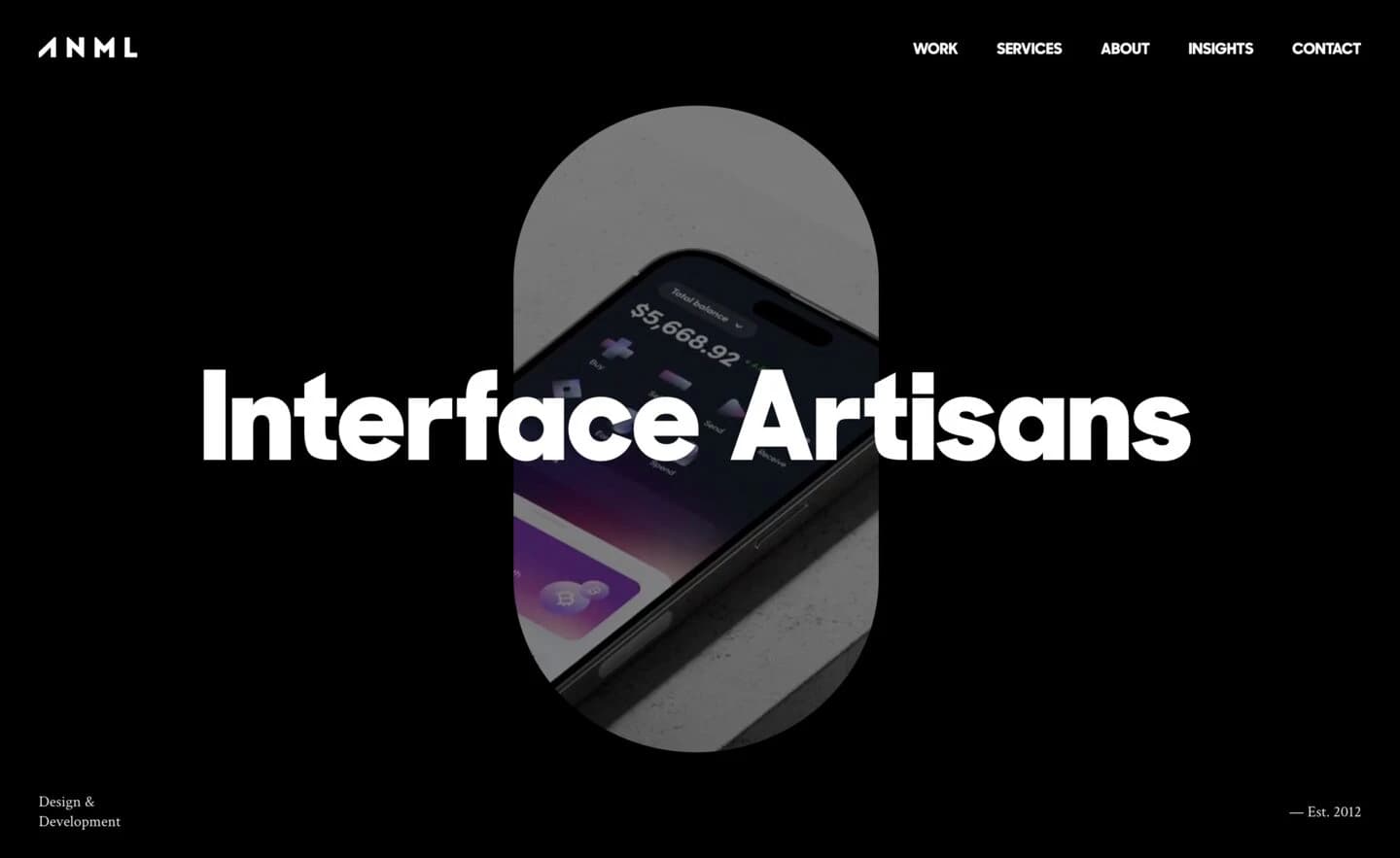
Pick ANML if you want a big-agency alternative. That means a senior-led team and direct access to the people doing the actual work: no junior hand-offs, no layers of account managers between you and the designers and engineers building your AI product.
| Platform | Rating | Reviews |
|---|---|---|
| Clutch | 5.0 | 16 |
| DesignRush | 4.9 | 20 |
| GoodFirms | 5.0 | 6 |
| TechBehemoths | 5.0 | 4 |
| 5.0 | 14 |
Overview
ANML is a design and development studio that has been integrating AI into product design long before generative AI became a marketing category. Founded by Douglas Hughmanick and Patrick Boscarino, the studio works with B2B SaaS, healthcare, IoT, and emerging-tech companies that need AI features designed into core experiences, not bolted on.
Why they stand out for AI
ANML has designed AI products for more than a decade. For Yummly, it was the core design team from 2012 to 2023, through the acquisition by Whirlpool, designing AI-generated meal plans and AI ingredient recognition as the platform grew to more than 50 million registered users and 2 million recipes. For PanasonicWell, it extended the brand system and supported UX and go-to-market for Umi, an AI wellness coach for families. For Enfabrica, it designed the website, launch campaign, and product configurator for the AI networking startup whose team and technology Nvidia later brought in for more than $900 million. It has also designed the web presence for Cognita, an AI radiology company.
What to know before hiring
ANML is built for companies that want a senior team that has been doing applied AI work for years, not an agency that added an AI section to their website after ChatGPT launched. Best fit for funded B2B and consumer companies where AI is core to the product, not a feature.
2. 925Studios: Best for AI startups that need product, website and design system from one team
Location: Remote-first
Founded: 2023
Team size: Boutique, senior-led
Best for: Funded AI and B2B SaaS companies shipping AI inside the product, from seed to Series B
Notable clients: MARA, Offa, Solana, Jupiter
Website: 925studios.co
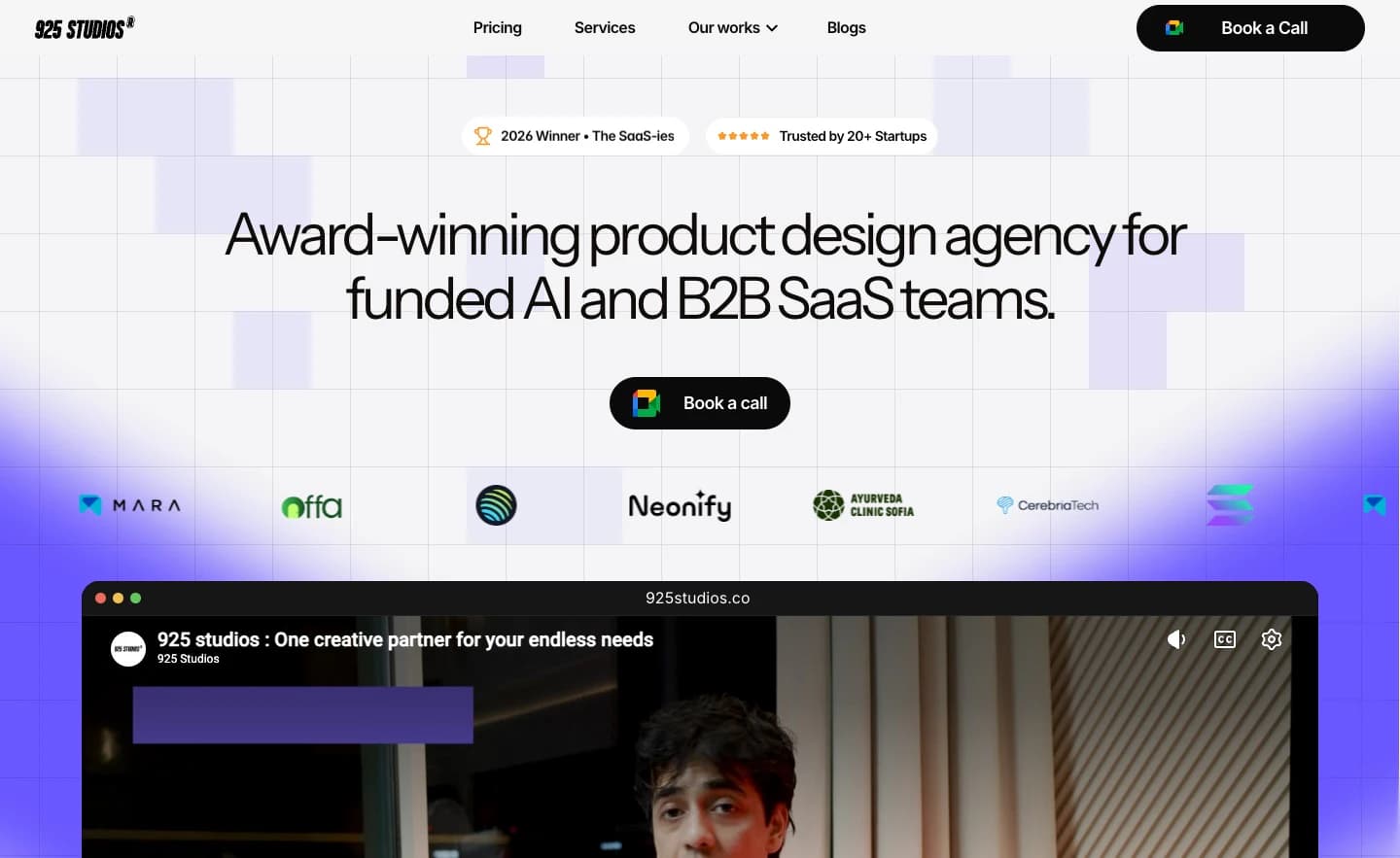
| Platform | Rating | Reviews |
|---|---|---|
| Clutch | 5.0 | 1 |
Overview
925Studios is a product design studio for AI and B2B SaaS companies. It designs product UX, marketing sites and design systems as one system, and has delivered 50+ projects for 20+ funded startups whose combined funding tops $10M.
Why they stand out for AI
925Studios designs for what happens after a model responds: how confidence shows up on screen, which next actions a user is offered, and where a person reviews or edits output before it reaches a customer. The team works with LLM tools every day in its own process, so it designs AI features from the user's side of the prompt. 925Studios was named Best AI SaaS & Web3 UI/UX Design Studio at The SaaS-ies 2026 by Acquisition International.
What to know before hiring
925Studios is design-led. It builds marketing sites, but product engineering stays with the client's developers. Engagements run as fixed-scope projects of 2 to 12 weeks or as a monthly retainer, starting at $7,000, with the same senior team from first flows to the shipped design system.
3. Viget: Best for AI features designed and engineered together
Location: Falls Church, VA (offices in Durham, Boulder, and Chattanooga)
Founded: 1999
Team size: 70+
Best for: US product teams that need AI features designed and built by one independent team
Notable clients: Standard AI, Spectrum AI
Website: www.viget.com
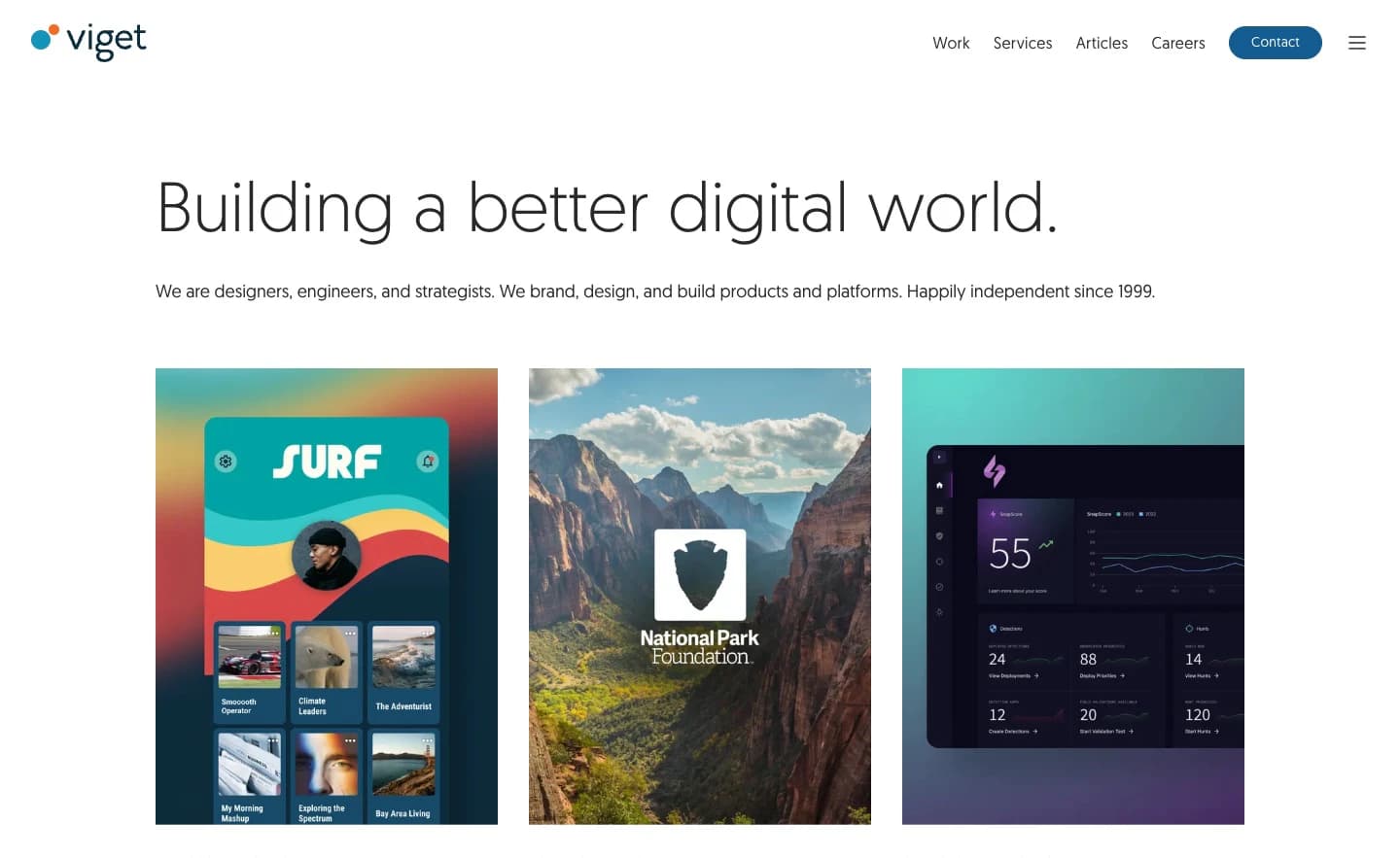
| Platform | Rating | Reviews |
|---|---|---|
| Clutch | 4.8 | 7 |
| 5.0 | 4 |
Overview
Viget is an independent, partner-owned digital agency that has combined strategy, design, and engineering under one roof since 1999. It works with product teams on apps and platforms end to end, from research through launch.
Why they stand out for AI
For Standard AI, Viget designed and built three connected apps (a shopper app, an in-store kiosk, and a store-manager app) for a computer-vision autonomous checkout system. It also worked on Spectrum AI, an AI-driven data platform for ABA therapy teams.
What to know before hiring
Viget positions itself as a product agency rather than an AI specialist, and its flagship AI work is computer vision rather than generative AI. Best fit when AI is one part of a broader product build that needs strong engineering.
4. DEPT: Best for AI integrated with marketing, content, and platform engineering
Location: Amsterdam, Netherlands (global offices across 30+ countries)
Founded: 2015
Team size: 4,000+
Best for: B2B and consumer companies that need end-to-end digital experiences with AI woven through creative, engineering, and marketing
Notable clients: Google, Patagonia, Philips, Audi, Twitch, eBay, Booking.com, Meta
Website: www.deptagency.com
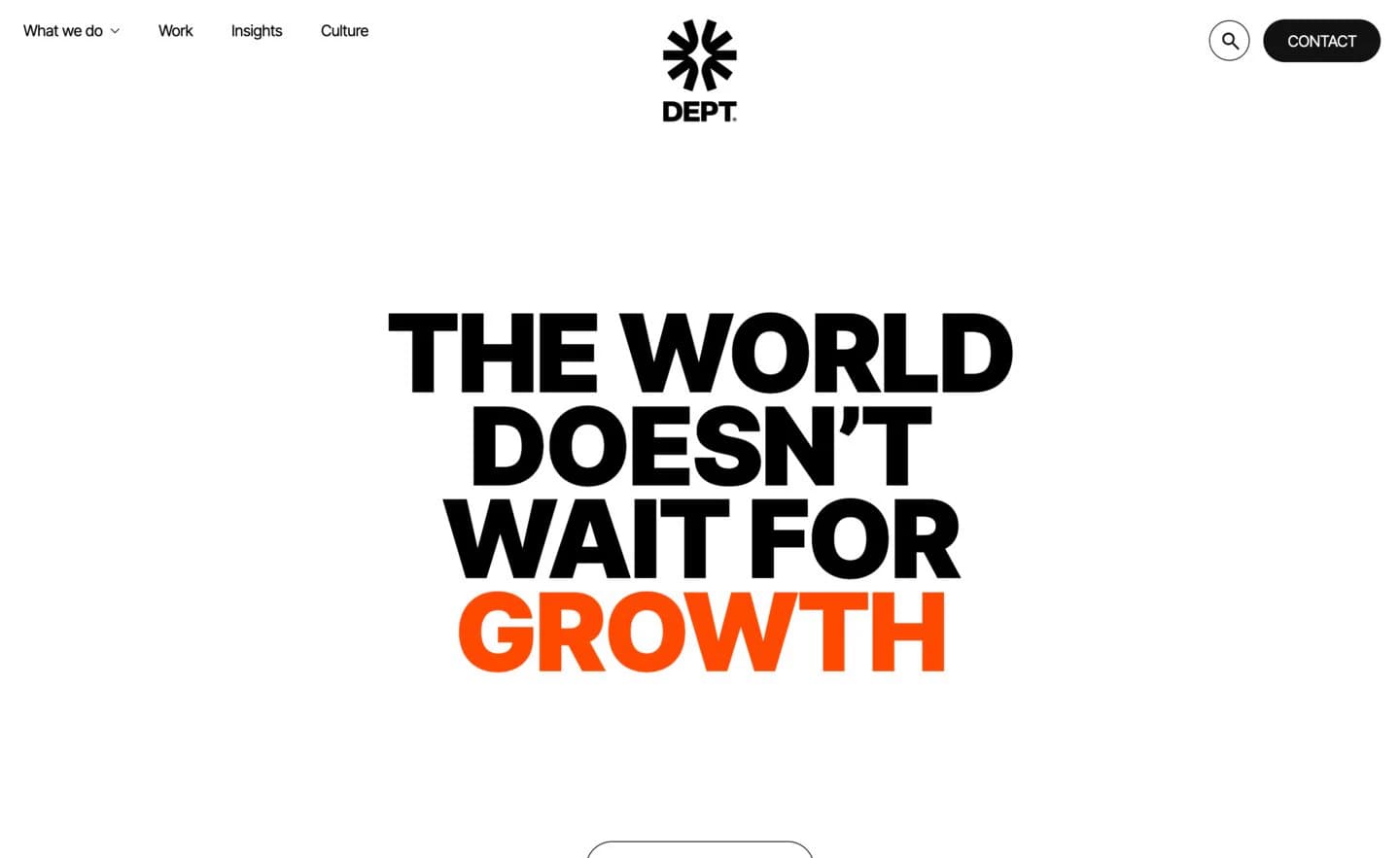
| Platform | Rating | Reviews |
|---|---|---|
| Clutch | 4.8 | 34 |
| TechBehemoths | 5.0 | 5 |
| 4.6 | 101 |
Overview
DEPT is a global digital agency named Network and Agency of the Year at the 2024 Webby Awards. They operate across four pillars (Creative, Engineering, Experience, and Growth) and are also a certified B Corp.
Why they stand out for AI
DEPT's proprietary AI platform Ada manages over $3.5 billion in media investment for clients, and they have positioned themselves as an AI-native consulting and creative agency. Their integrated model means AI capability is embedded across creative, engineering, marketing, and analytics teams, not siloed in a separate practice.
What to know before hiring
DEPT is built for complex, multi-disciplinary engagements at enterprise scale. Best suited for companies that need AI woven through the full marketing-to-product stack rather than a single AI feature.
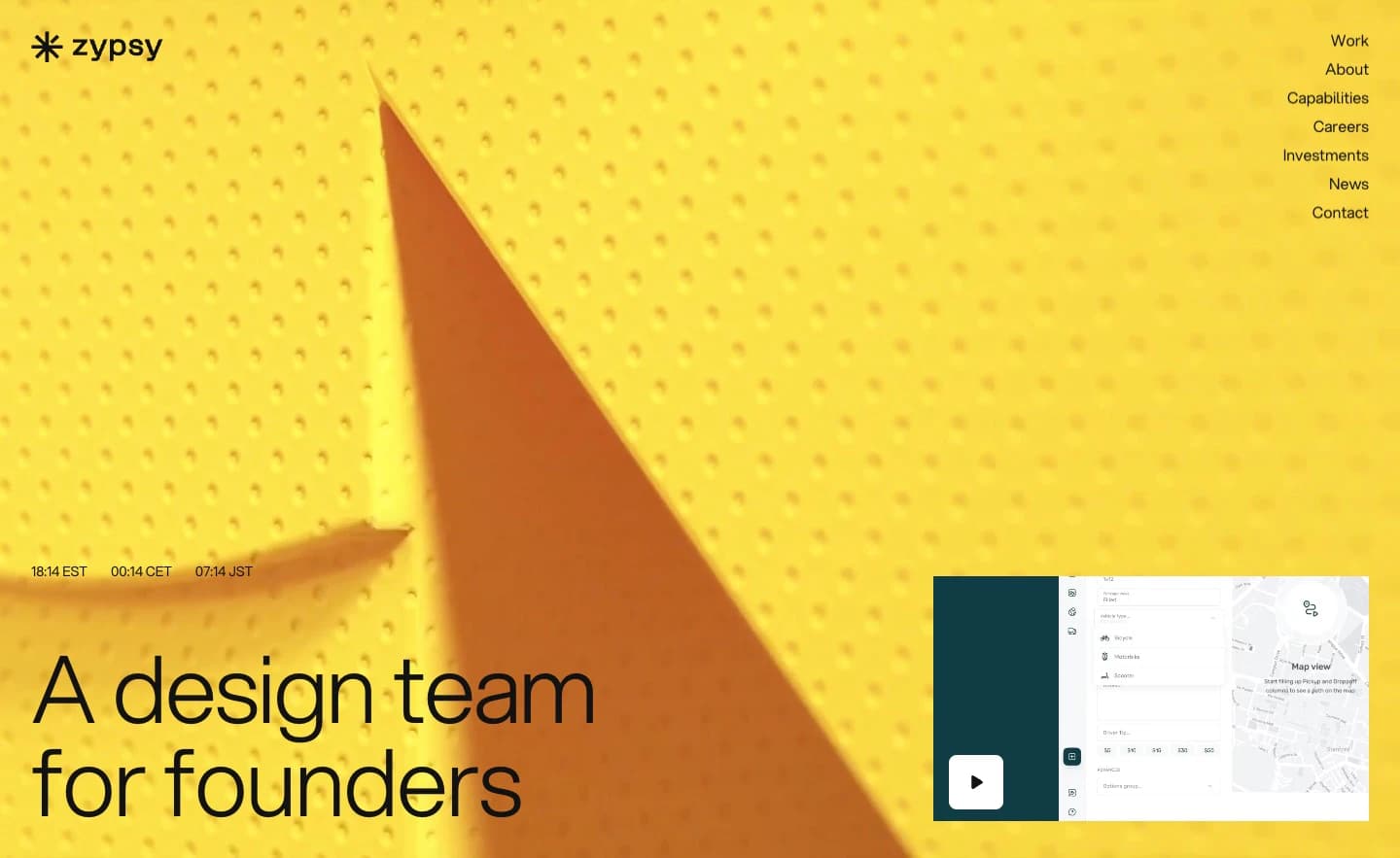
5. Zypsy: Best for venture-backed AI startups
Location: United States (distributed team)
Founded: 2018
Team size: 10–49
Best for: Early-stage AI startups that need brand, website, and product design from one team
Notable clients: Captions, Robust Intelligence, Crystal DBA
Website: www.zypsy.com
| Platform | Rating | Reviews |
|---|---|---|
| Clutch | 5.0 | 7 |
| 5.0 | 7 |
Overview
Zypsy is a design studio built for founders. Alongside brand, product, and engineering work, it invests in some of the startups it works with through Zypsy Capital.
Why they stand out for AI
For Captions, the AI video app, Zypsy helped take the product from a macOS tool to a full web platform, including a new design system delivered in two months. For Robust Intelligence, the AI security company later acquired by Cisco, Zypsy handled brand, web, and embedded product design.
What to know before hiring
Zypsy's model is tuned to early-stage, venture-backed companies, and much of its work spans brand and web as well as product. Teams that want a vendor with no equity relationship should ask how its investment arm works.
6. Bakken & Bæck: Best for AI companies building brand and product together
Location: Oslo, Norway (offices in Amsterdam, Bonn, London, and Barcelona)
Founded: 2011
Team size: 60+
Best for: AI companies moving from launch to scale that need brand and product design in one place
Notable clients: Sierra, Parallel, Google DeepMind
Website: bakkenbaeck.com
Overview
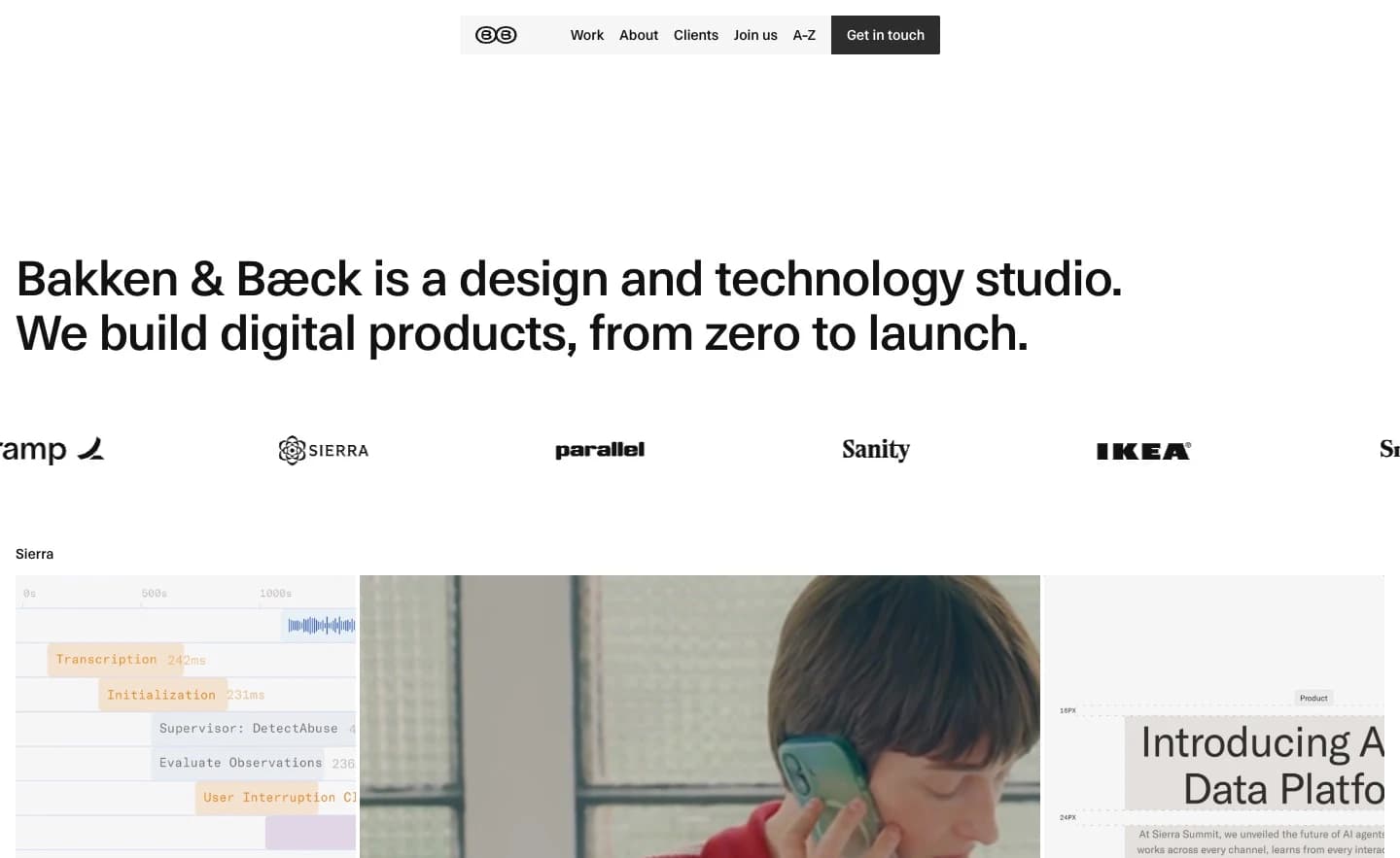
Bakken & Bæck is a design and technology studio founded in Oslo in 2011 and still run by its founders. Its team of 60+ builds digital products from first concept through launch.
Why they stand out for AI
For Sierra, the conversational AI company founded by Bret Taylor and Clay Bavor, Bakken & Bæck created the brand, website, and design and narrative work for its conversational AI products, launched alongside Sierra's 2024 debut. For Parallel, it delivered brand, web, foundational design patterns, and product strategy. It has also done brand work for Google DeepMind.
What to know before hiring
Bakken & Bæck is based in Europe, and most of its AI work is weighted toward brand and web. For deep product UX on complex AI workflows, ask for examples beyond launch work. It is not listed on the major agency review platforms.
7. Monks: Best for AI-native global content and marketing at scale
Location: Global (HQ Hilversum, Netherlands; major hubs NYC, LA, London)
Founded: 2001
Team size: 6,000+ (S4Capital subsidiary)
Best for: Global enterprises needing AI-powered content, media, and marketing at massive scale
Notable clients: Google, General Motors, Burger King, Netflix
Website: monks.com
| Platform | Rating | Reviews |
|---|---|---|
| 4.7 | 80 |
Overview
Monks (rebranded from Media.Monks in 2024) is one of the largest digital-first agencies in the world. A subsidiary of S4Capital, Monks has restructured around two integrated practices (marketing services and technology services), with AI at the core of both.
Why they stand out for AI
Monks has made AI a strategic centerpiece, with heavy investment in AI-powered creative tooling, content production, and personalization at scale. For global brands that need to ship AI-personalized experiences across markets and languages, the operational scale is hard to match.
What to know before hiring
Built for large global enterprises with substantial budgets. The AI-first approach is genuinely innovative but requires buy-in to a particular operating model. Mid-market companies will find the engagement model and pricing better suited to smaller agencies on this list.
8. AKQA: Best for AI-enabled brand innovation at WPP scale
Location: San Francisco, NYC, London, Berlin, Shanghai, Sydney, and more (WPP-owned)
Founded: 1995
Team size: 2,000+
Best for: Established consumer and B2B brands integrating AI into product, marketing, and creative work
Notable clients: Nike, Visa, Verizon, Audi, Volvo, Activision, Diageo
Website: www.akqa.com
| Platform | Rating | Reviews |
|---|---|---|
| 4.8 | 8 |
Overview
AKQA is a global innovation and digital design agency, part of WPP. Founded in 1995, they're known for brand-led innovation work: campaigns, products, and platforms that win at the intersection of marketing and emerging tech.
Why they stand out for AI
AKQA's AI work tends to live at the intersection of brand and product: generative AI campaigns, AI-personalized experiences for major consumer brands, and AI-integrated platforms for clients like Nike and Visa. Strong fit when AI needs to amplify a brand expression, not just power a backend.
What to know before hiring
Best for established brands that want AI integrated with marketing and creative work. The WPP relationship brings scale and creative depth but also means a larger, more layered engagement than a boutique.
9. R/GA: Best for AI products at the intersection of innovation and brand
Location: New York, NY (global offices in Austin, LA, London, Berlin, Tokyo, and more)
Founded: 1977
Team size: 1,500+
Best for: B2B and consumer brands building AI products at the intersection of innovation strategy and brand
Notable clients: Nike, Samsung, Microsoft, Johnson & Johnson, Verizon, Google
Website: rga.com
| Platform | Rating | Reviews |
|---|---|---|
| 4.9 | 9 |
Overview
R/GA is a legendary agency that has reinvented itself across multiple eras of technology: from computer-generated graphics in the 1970s, to digital advertising in the 2000s, to innovation consulting today. In 2025, R/GA became an independent agency after spinning out of Interpublic Group with private equity funding.
Why they stand out for AI
R/GA was building AI-enabled product platforms before AI was a category. The Nike+ platform is the textbook example. Their AI work today focuses on innovation consulting and AI-enabled product development for ambitious B2B and consumer brands. Strong fit when AI is part of a broader business-model innovation, not a feature drop.
What to know before hiring
Newly independent status brings fresh energy and faster decision-making. Best suited for ambitious companies that want a strategic partner to help them rethink the business, not just execute on a brief.
10. Accenture Song: Best for Fortune 500 AI transformation at consultancy scale
Location: Global (Accenture HQ Dublin; Song offices in 40+ countries)
Founded: 2009 as Accenture Interactive; rebranded Accenture Song in 2022
Team size: 25,000+ (parent Accenture: 750,000+)
Best for: Fortune 500 AI transformation engagements that combine strategy, design, technology, and operations
Notable clients: BBVA, Carrefour, MARS, Unilever, J&J, plus much of the Fortune 100
Website: www.accenture.com/us-en/about/song-index
Overview
Accenture Song is the world's largest tech-powered creative and design group. Formed from Accenture Interactive plus a decade of strategic acquisitions (Fjord, Droga5, Rothco, Karmarama, and many others), Song combines the design, creative, and product capability of leading independent agencies with the global scale, technology depth, and consultancy muscle of Accenture itself.
Why they stand out for AI
Accenture Song's AI work is the inverse of a boutique pitch. They lead the largest AI transformation programs in the world: engagements that simultaneously touch strategy, design, technology, change management, and operations across multiple geographies. Through parent Accenture they have direct partnerships with OpenAI, Anthropic, Google, Microsoft, and NVIDIA, plus internal Gen AI tooling deployed across the delivery stack.
What to know before hiring
Built for Fortune 500 transformations with eight-figure budgets and multi-year timelines. Not a fit for smaller teams or single-feature AI work, but genuinely unmatched when a project requires consultancy, design, engineering, and organizational change management at the largest scale. Note: Accenture Song does not list on Clutch, DesignRush, or other boutique-focused review platforms, which is why their row in the summary table above shows no data. Reputation comes from analyst reports (Gartner, Forrester) rather than directory reviews.
How to Choose the Right AI Design Agency
Picking an agency from a list is just the starting point. Here are the questions that actually matter when you are evaluating AI design partners:
Have they shipped AI in production?
Many agencies have prototype AI demos. Far fewer have shipped AI features that real users rely on at scale. Ask for case studies where the AI feature is live, used by paying customers, and has been measured in production.
How do they design for AI uncertainty?
Models get things wrong. Good AI design surfaces confidence, makes errors recoverable, and keeps humans in the loop where it matters. Ask candidates how they think about confidence indicators, error states, and graceful degradation.
How do they handle the design-engineering loop?
AI features iterate faster than traditional UI: model behavior changes, prompts get tuned, outputs evolve. Ask how their designers and engineers stay in sync, and how quickly they can iterate from a model change to a live UI update.
Do they understand your domain?
AI products in healthcare, financial services, education, and regulated industries have constraints that consumer AI does not. If your domain has compliance or safety requirements, ask candidates for domain-specific experience.
Is their team senior or junior?
Some agencies pitch with their A-team and then hand execution to junior staff. AI design is hard enough that you want the senior people doing the actual work. Ask explicitly who will be on your project.
FAQ
What makes an agency an "AI design agency"?
An AI design agency designs products where artificial intelligence is core to the user experience: generative AI features, ML-powered recommendations, AI agents, automation interfaces, and similar. They understand patterns specific to AI products like confidence indicators, uncertainty visualization, human-in-the-loop workflows, and explainability that traditional design agencies often miss. The best ones have shipped production AI, not just prototyped demos.
How much does AI design cost in 2026?
Pricing varies significantly based on scope and agency tier. Boutique AI-native agencies typically range from $50,000 to $200,000 for a focused AI product engagement. Mid-market agencies fall between $150,000 and $500,000 for larger projects. Enterprise agencies like DEPT, Monks, or AKQA start at $500,000 and scale into the millions for multi-disciplinary AI platform work.
Should I hire an AI specialist or a generalist agency?
Depends on your project shape. AI-specialist agencies (like the boutiques on this list) tend to move faster, bring deeper AI pattern knowledge, and integrate AI into product design at lower cost. Generalist agencies (DEPT, Monks, AKQA) make more sense when AI needs to integrate with broader brand, marketing, content, and platform work at enterprise scale. For most B2B and consumer companies launching AI features inside an existing product, a senior-led specialist will be a better fit.
What questions should I ask an AI design agency before hiring?
Ask for case studies of AI features that are live in production and measured. Ask how they handle confidence indicators, error states, and human-in-the-loop patterns. Ask who specifically will be doing the work: designers and engineers by name, not just team composition. Ask how they keep design and model behavior in sync as the AI iterates. And ask for measurable client outcomes, not just portfolio screenshots.
How is designing for AI different from regular product design?
AI products are probabilistic, not deterministic. The same input can produce different outputs, models get things wrong, and confidence in answers varies. Good AI design surfaces this uncertainty rather than hiding it, makes errors recoverable, keeps humans in control of consequential decisions, and explains model behavior in terms users can act on. Designers without AI experience tend to design AI features as if they were traditional CRUD interfaces, which produces brittle and frustrating experiences.
What red flags should I watch for when evaluating AI design agencies?
Watch for: AI sections added to the website after ChatGPT launched but no case studies of production AI; pitches that lead with AI buzzwords but cannot articulate how they design for uncertainty; agencies that show prototype demos but not features running in production; A-team pitches followed by junior execution; and any agency that treats AI as a generic "feature" rather than a class of product with its own design patterns.
About Anml

Related posts

What Are the Best Digital Product Agencies in 2026?
A ranked look at the best digital product agencies in 2026 — from Silicon Valley boutique ANML to global studios like MetaLab, Huge, Work & Co, and Instrument.

Best B2B Web Design Agencies in 2026
A curated look at the 15 best B2B web design agencies in 2026, spanning boutique studios like ANML to global firms like R/GA and DEPT — with honest guidance on who's right for your budget and goals.

Create faster wireframes with these AI tools
Learn how to speed up wireframing with these top tools in the design industry.